The Story
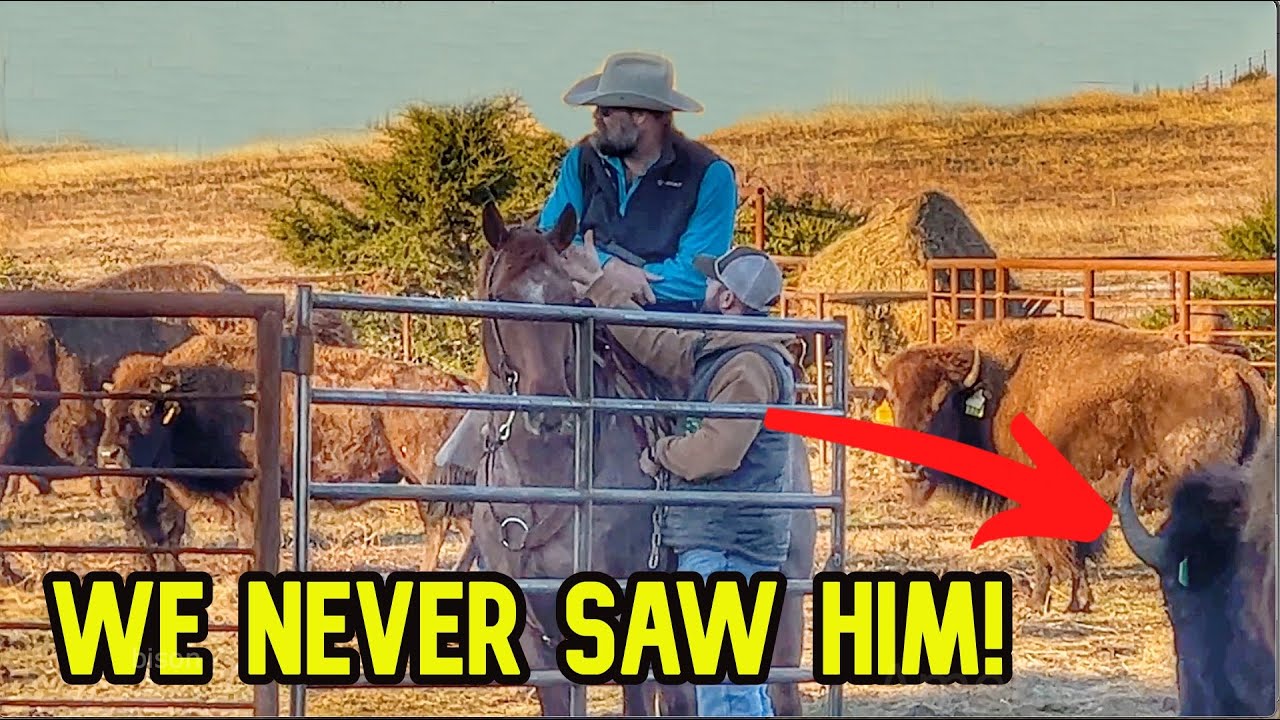
Three American bison bulls now share one Oklahoma pasture, and two of them should not be there. A gate opened for a skid steer, and they shot through behind it.
This is fall working day on a ranch running its largest herd so far, and the plan had three lines. One cow alone. Then the main herd, about 40 animals. Then the two bulls, penned to put on more weight after a busy summer and a drought. The skid steer with the hydraulic pusher had already failed to make the turn near the squeeze chute, and the crew had to shift freestanding panels.
A couple of years ago the ranch noticed the cow had lost a good part of her vision, and nobody knows why. She is healthy and she can still see, just not like the others, and mixed in with the herd she could get hurt. So she comes down alone. The scale reads 690 pounds, well under the 1,000 a cow can reach.
Then the bulls. A bull can reach 2,000 pounds, bison herds run on linear dominance hierarchies, and the animal can spin quickly and jump high fences, so steel panels carry only so much authority. The worried rancher calls hands off, no attempt to cut them out. When he looks up again, three of his crew have the pair split from the main herd. He does not know how they did it, and he does not ask. The two go down the chute and back to their pen.
That leaves the 40, and the harder job. Breaking a herd that size into small batches is hard going, and one of the crew suspects the horse, which the animals are not used to. The idea is a funnel: big pen, smaller pen, smaller still, then the alley and the chute. More freestanding panels would tighten it, the rancher says. For now the skid steer and its pusher go into the holding pen, and the light goes with the rest of the herd still unworked.