The Story
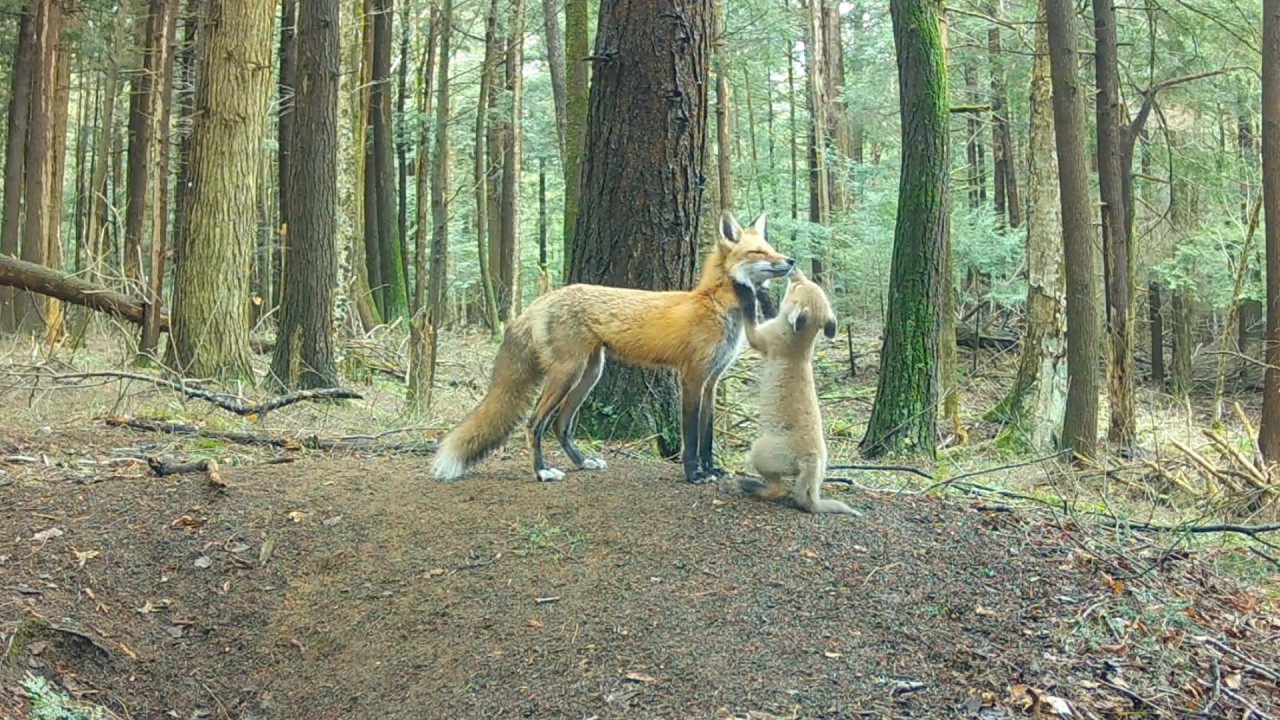
A fox pup rears up on its hind legs and presses its face to its mother's mouth. She is Sage, a red fox raising seven pups in the hemlock woods by Lake Ontario, and inside 24 hours she has caught four rabbits, five small rodents and a bird for them.
She is not finished. She hunts on through the night and brings back another rabbit, a fish and a second bird. Between deliveries she nurses the litter, four times in one 24-hour stretch and three more the next day. It is the end of April, and the pups are almost 2 months old.
Her colors are textbook Vulpes vulpes: a reddish coat, black legs and a long, bushy tail tipped in white.
Seven is a big family. In Connecticut, red fox litters average 4 or 5 kits. Kits are weaned by 8 to 10 weeks, which puts Sage's litter near the line, though it still nurses several times a day. In a red fox family both parents bring food and guard the den, and the male feeds the vixen. Sage is doing it without a mate.
Red foxes take mice with a characteristic pounce called mousing: the fox stands motionless, listening, then leaps high and drives its forelimbs down to pin the prey. It can hear a mouse or vole chewing or squeaking as far as 100 feet away. A red fox eats 0.5 to 1 kg a day, mostly rodents, rabbits, insects and fruit.
When she finally settles at the den to rest and eat, the crows find her. For an hour they harass her with their calls, warning others that she is there. Mobbing is the word for it, and nobody naps through mobbing.
Once they leave, she gets a couple of hours of quiet. At 8 pm she heads back out. Red foxes are mainly active at dawn, dusk and night, though daytime sightings are not unusual. Sage's tally runs a full day and on into the night.