American bison field guide
Field Guide
| Common name | American bison |
|---|---|
| Scientific name | Bison bison |
| Family | Bovidae (cattle, bison, antelope and goats) |
| Size | Mature bulls can reach 5.5 to 6.5 ft (1.9 m) at the hump and 9 to 12.5 ft (2.7 to 3.8 m) long; cows are normally 5 ft (1.5 m) high and 7 to 10 ft (2.2 to 3.2 m) long.Smithsonian's National Zoo and Conservation Biology Institute |
| Weight | Bulls up to 2,000 pounds; cows up to 1,000 pounds (Yellowstone).National Park Service (Yellowstone National Park) |
| Lifespan | 15 to 20 years in the wild; up to 40 years recorded in captivity.Animal Diversity Web, University of Michigan |
| Diet | Yellowstone bison: more than 90% grasses, sedges and other grass-like plants; forbs and browse usually under 5%.National Park Service (Yellowstone National Park) |
| Active when | Primarily diurnal, especially early morning and late afternoon, with grazing periods between loafing and ruminating.NatureServe Explorer |
| Range | Once Alaska to northern Mexico; now found on private and protected lands in areas of the western United States and Canada.Animal Diversity Web, University of Michigan |
| Conservation status | IUCN Red List: Near Threatened; NatureServe Global Rank G4. COSEWIC (Canada): Plains Bison Threatened, Wood Bison Special Concern.NatureServe Explorer |
Field Marks
- A hump over the front shoulders and slimmer hindquarters.Smithsonian's National Zoo and Conservation Biology Institute
- Both sexes have short, sharply pointed, hollow horns that curve outward and up.Smithsonian's National Zoo and Conservation Biology Institute
- Thick, long, dark hair on the head and front of the body; shorter hair on the rear.Smithsonian's National Zoo and Conservation Biology Institute
- Calves are red to reddish-tan at birth, begin turning brown at about two and a half months, and are entirely brown by four months.Animal Diversity Web, University of Michigan · National Park Service (Yellowstone National Park)
- Wood bison have a taller hump peaking forward of the front legs and woolly hair along the ribs, where plains bison have very short hair.Alaska Department of Fish and Game
Habitat
- Historically grasslands and open savannas, but also boreal to semi-desert habitats where grazing was suitable.Animal Diversity Web, University of Michigan
- Yellowstone bison historically occupied about 7,720 square miles (20,000 km2).National Park Service (Yellowstone National Park)
- Yellowstone's central plateau reaches 7,875 feet (2,400 m), with temperatures reaching -44°F.National Park Service (Yellowstone National Park)
- Yellowstone bison migrate up to 70 miles between summer and winter ranges.National Park Service (Yellowstone National Park)
- Mountain populations historically moved to lower valley elevations in winter; U.S. herds now move mostly within parks and nearby land.NatureServe Explorer
- Wood bison once ranged across northwestern Canada and much of Interior and Southcentral Alaska.Alaska Department of Fish and Game
Behavior
- Yellowstone bison typically forage 9 to 11 hours a day.National Park Service (Yellowstone National Park)
- Bison eat about 1.6 percent of their body mass in dry vegetation per day.Smithsonian's National Zoo and Conservation Biology Institute
- Herds are arranged by sex, age, season and habitat; older bulls are often solitary.Smithsonian's National Zoo and Conservation Biology Institute
- Yellowstone groups average about 20 in winter and about 200 in summer, with up to about 1,000 in the breeding season.National Park Service (Yellowstone National Park)
- Herds have linear dominance hierarchies; when traveling they form a line led by an adult cow.Animal Diversity Web, University of Michigan
- Bison communicate with grunts and snorts and have an excellent sense of smell and hearing.Animal Diversity Web, University of Michigan · Smithsonian's National Zoo and Conservation Biology Institute · U.S. Department of the Interior
- Wallowing, rolling in dust and mud, deters biting flies and removes tufts of molted fur.National Park Service (Yellowstone National Park)
- During the rut, bulls wallow to display strength and vigor; wallowing increases in the breeding season.National Park Service (Yellowstone National Park) · Animal Diversity Web, University of Michigan
- Yellowstone bison mate in late July through August; older males (over 7 years) do most of the breeding.National Park Service (Yellowstone National Park)
- Cows give birth to one calf in late April or May after a gestation of 9 to 9½ months.National Park Service (Yellowstone National Park)
- Calves can keep up with the herd 2 to 3 hours after birth and nurse for seven to eight months.National Park Service (Yellowstone National Park) · Animal Diversity Web, University of Michigan
- A tail hanging down and switching usually means calm; a tail standing straight up is a warning.U.S. Department of the Interior
- Bison can run up to 35 miles per hour (55 kph), spin around quickly, jump high fences, and are strong swimmers.National Park Service (Yellowstone National Park) · U.S. Department of the Interior
- Mountain lions and wolves prey on elderly, ill bison and calves.Animal Diversity Web, University of Michigan
Winter
- Winter insulation comes from thick skin and underfur, long guard hairs, and layers of fat.National Park Service (Yellowstone National Park)
- Large shoulder and neck muscles let bison swing their heads side to side to clear snow from foraging patches.National Park Service (Yellowstone National Park) · Smithsonian's National Zoo and Conservation Biology Institute
- The heavy coat is shed in spring as bison roll to loosen the hair, which falls off in gobs.Smithsonian's National Zoo and Conservation Biology Institute
- Winter groups in Yellowstone are smaller, averaging about 20 bison.National Park Service (Yellowstone National Park)
- On average 9 of 100 adult Yellowstone bison die in winter, and 20 to 40 of 100 first-year animals may die.National Park Service (Yellowstone National Park)
Questions
How big is a bison?
Bison are the largest land mammal in North America. Bulls weigh up to 2,000 pounds and cows up to 1,000 pounds.National Park Service (Yellowstone National Park)
Are bison dangerous to people?
Bison have injured more people in Yellowstone than any other animal. The park says to stay at least 25 yards (23 meters) away and never approach one for a photo.National Park Service (Yellowstone National Park)
How do I know a bison is upset?
Warning signs include bluff charging, head bobbing while staring, pawing, bellowing, or a raised tail. They mean you are too close and a charge is imminent: walk or run away at once.National Park Service (Yellowstone National Park) · U.S. Department of the Interior
How do bison eat in deep snow?
They swing their heads side to side to sweep snow off the grass. Large shoulder and neck muscles, the hump, power this motion.National Park Service (Yellowstone National Park) · U.S. Department of the Interior
Why do bison roll in the dirt?
This is wallowing. It deters biting flies, sheds molted fur, and during the rut bulls do it to show strength.National Park Service (Yellowstone National Park)
What is special about the Yellowstone herd?
Bison have lived in Yellowstone continuously since prehistoric times, but poaching cut the wild herd to about two dozen by 1902. That year the U.S. Army brought in 21 bison from two private herds, which later mixed with it.National Park Service (Yellowstone National Park)
What is the difference between plains and wood bison?
They are two subspecies of the same species. Wood bison average about 15% heavier, with a taller, more forward hump and woolly hair along the ribs.Smithsonian's National Zoo and Conservation Biology Institute · Alaska Department of Fish and Game
Are there wild wood bison in the United States?
Yes. In 2015, 130 wood bison were released along the Innoko River near Shageluk in Southwest Alaska.Alaska Department of Fish and Game
How many bison were there, and how many now?
Estimates before 1800 ranged from 30 to 100 million, falling below 1,000 by the 1890s. About 30,000 are in conservation herds and about 500,000 are managed as livestock.Smithsonian's National Zoo and Conservation Biology Institute
Is the bison the national mammal?
Yes. The American bison became the U.S. national mammal on May 9, 2016.U.S. Department of the Interior
Clips
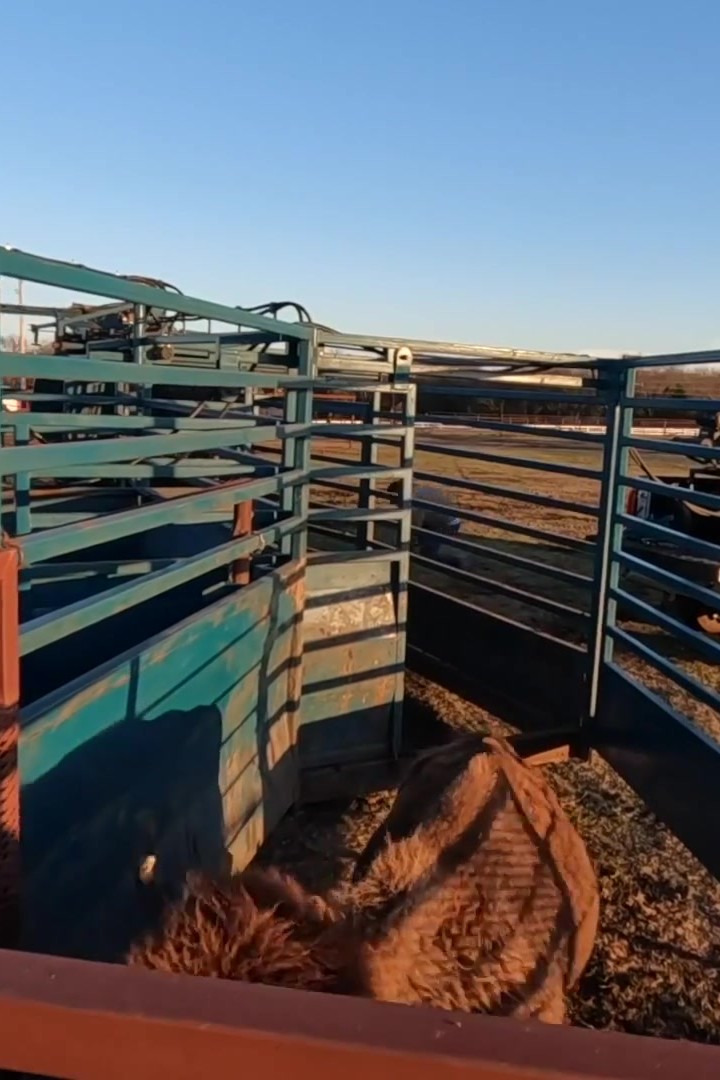 Tagged bison and a dark horn on fall working day
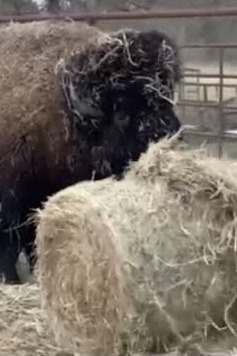 Big Joe the bison takes apart a round hay bale
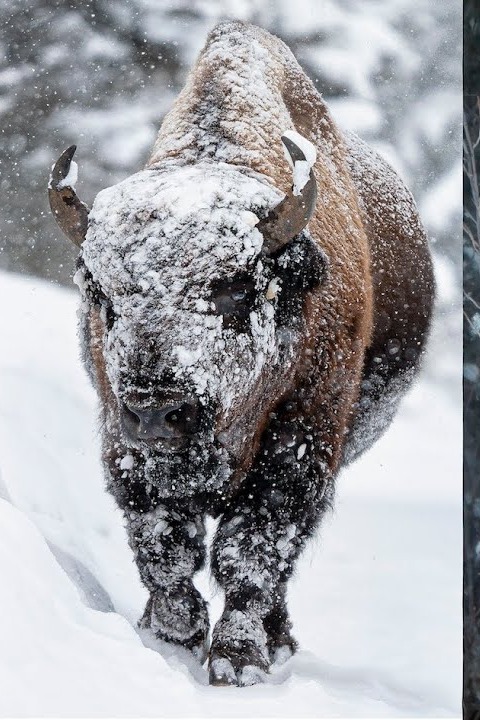 Face caked in snow, a bison plods through January
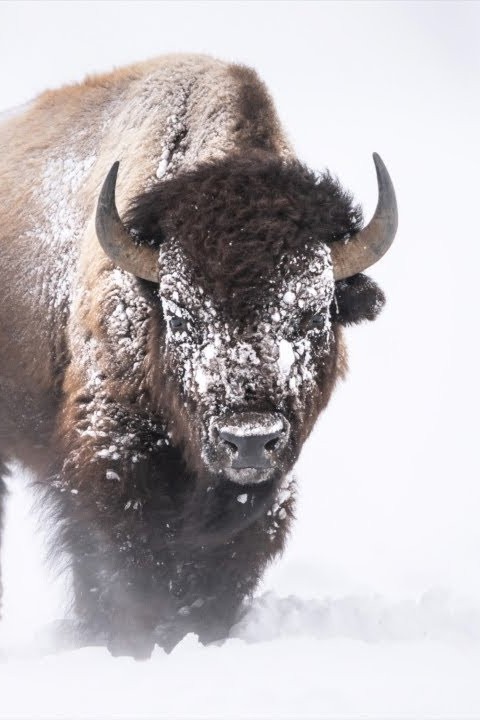 Bison walks out of a whiteout in the Tetons
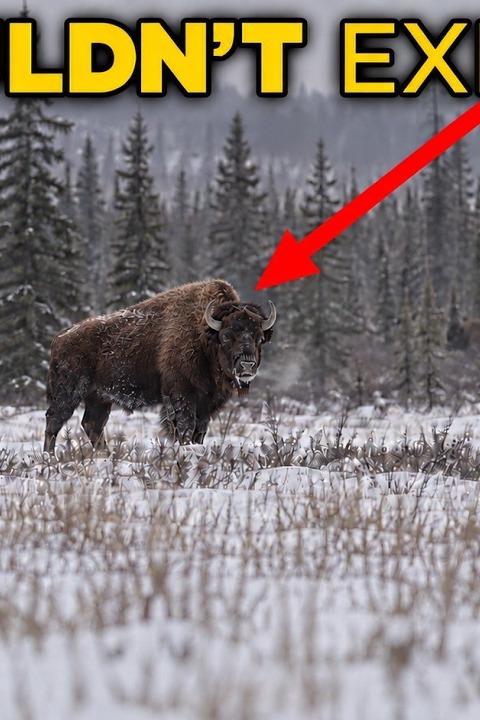 Wood bison herd found after being written off
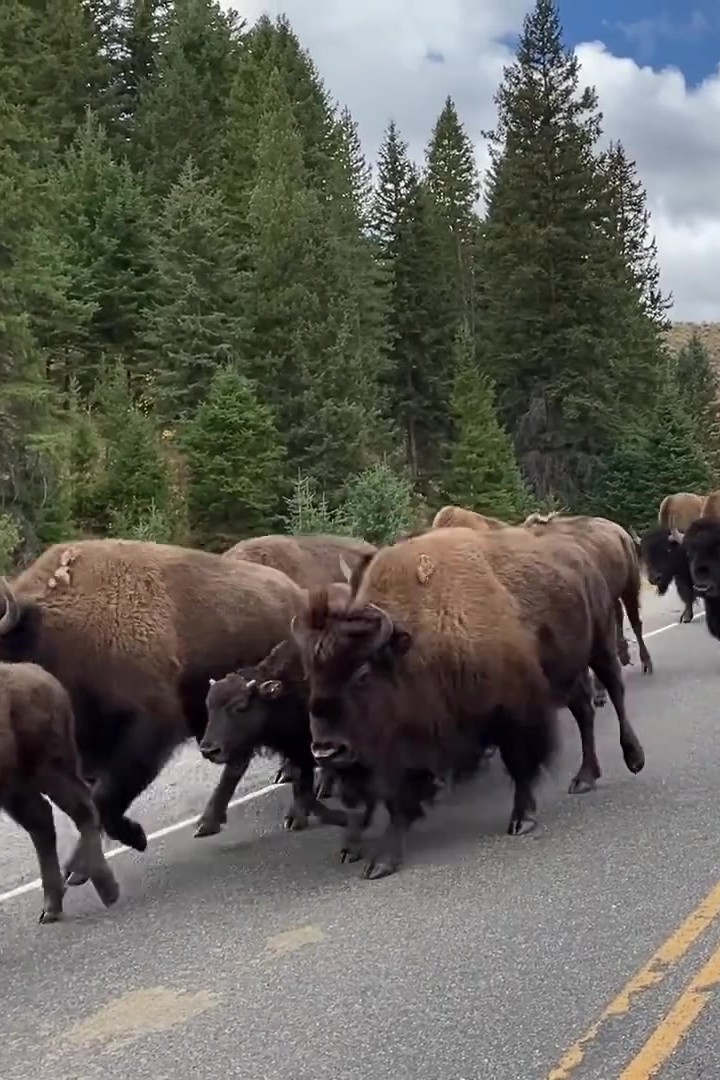 Bison herd takes over a Yellowstone road
 A newborn bison calf in late spring snow
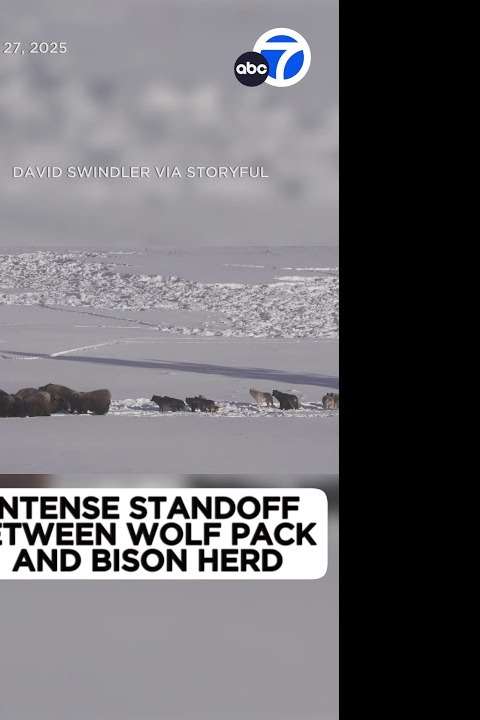 Bison herd and wolf pack face off in the snow
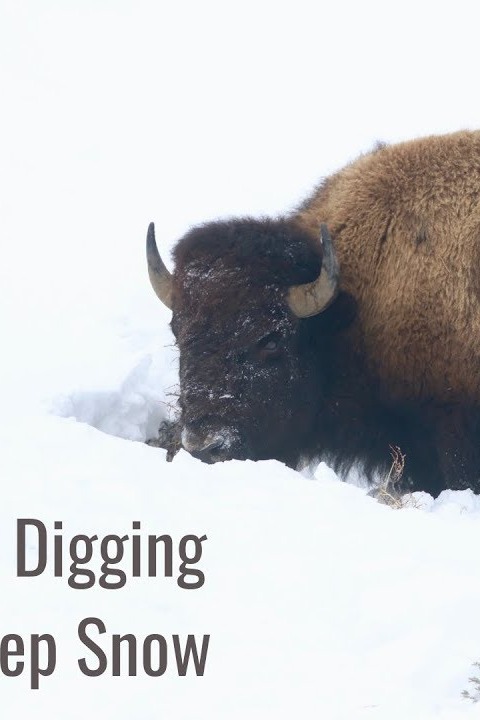 Bison shovels deep snow with its forehead
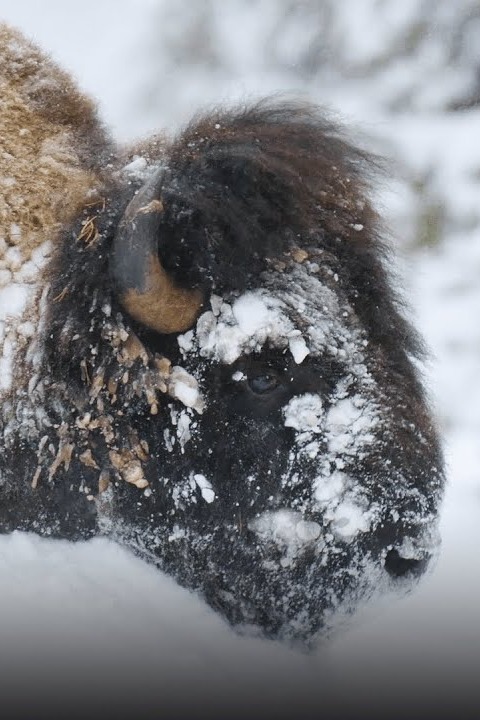 Snow-caked bison in a Yellowstone blizzard
On a fall working day at an Oklahoma ranch, the crew works a cow with failing sight on her own, then two bison bulls slip through a gate to join a third.
Big Joe, an American bison bull, rattles a tractor by hitting the round bale it carries, then tears the bale down and rolls the rest around his pen.
In a late-January snowfall in Yellowstone, an American bison plods toward the camera with its face, hump and forelegs caked white.
On a wind-scoured flat in the Tetons, a band of five or six bison walks slowly in from about 200 yards to full-frame range in the last hour of light, and one lies down in the snow at dusk.
A 1957 patrol flight finds about two hundred bison along the Nyarling River, the herd later measured as pure wood bison and used to seed nearly every recovered herd.
A dense column of American bison fills both lanes of a Yellowstone road and flows past a car, one big animal passing right beside the hood.
Two newborn bison calves, one perhaps born that same day, nurse beside their mothers in a Yellowstone snowstorm that buried ground already gone green.
In Yellowstone's Hayden Valley in late January, a bison herd stands bunched on the snow to protect its calves while a wolf pack waits beside it.
In a deep Wyoming snowfield, a bison plows the drift aside with its forehead to reach food buried under the snowpack.
In a Yellowstone blizzard, snow-caked bison clear drifts with their heads to reach buried grass until a lead cow takes the herd out of the valley.
Sources
- Bison, National Park Service (Yellowstone National Park)
- American bison, Smithsonian's National Zoo and Conservation Biology Institute
- Bison bison (American bison), Animal Diversity Web, University of Michigan
- Bos bison, American Bison, NatureServe Explorer
- Safety, National Park Service (Yellowstone National Park)
- Wood Bison, Alaska Department of Fish and Game
- 15 Facts About Our National Mammal: The American Bison, U.S. Department of the Interior