My Crittercam
My Crittercam › Grizzly bear

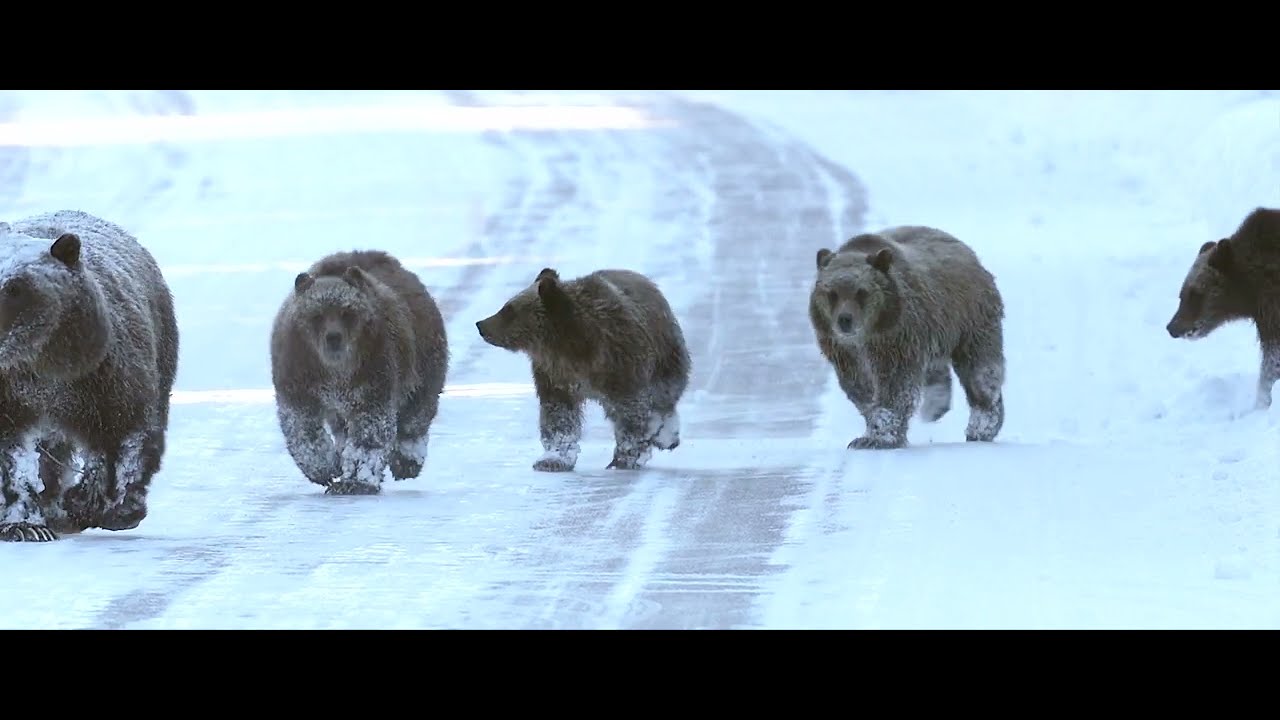
Grizzly 399 and four cubs take a snowy road

Two snow-dusted grizzly bears walk along an icy road, the one on the left cut by the frame edge and the one on the right turning its head to look left.

Footage: gregbalvin · 1:06 · uploaded March 12, 2022
Written by My Crittercam · published November 6, 2026

The Story

A grizzly sow and four cubs come out of the trees above a snow-packed road in Grand Teton National Park and jump the bank. Within moments the whole family is on the road, walking straight at the truck.

This is grizzly 399, and the date is December 31, 2020. The road runs south of Jackson Lake Dam toward Signal Mountain, and the camera rides on the truck's bumper, low and level with the bears. The footage is slowed down. All five keep coming, legs plastered with snow, in no hurry to leave the road to anyone else.

New Year's Eve is late for a grizzly family to be strolling around. Lower-48 grizzlies den for four to six months, typically going in from October to December, and females tend to enter earlier than males. Ahead of that, in the autumn feeding binge, a bear can put on more than three pounds a day. Once denned, they do not eat or drink at all.

Then there is the number. Four cubs is a big litter. The average for grizzlies is about two, and in Alaska litters run from one to four, with fewer than half of the cubs there surviving. All four of these are already big, and the whole family looks in good shape. Grizzly families typically stay together two or three years before the young strike out alone.

The stakes behind that tally are steep. A female grizzly may need ten years or more just to replace herself, one of the slowest reproductive rates among land mammals. In the pecking order, mature females with cubs generally come second, behind adult males and ahead of other single adults, for the best food and ground.

Anyone trying to sort these animals from black bears should look past the coats. Both species run from blond to black. Grizzlies carry a hump of muscle above the shoulders, a dished face and front claws built for digging rather than climbing.
Field Guide

Grizzly 399 leads her four cubs down a snow-packed road in Grand Teton on December 31, 2020, straight toward a truck's bumper camera. Full field guide for the Grizzly bear

Common nameGrizzly bear
Scientific nameUrsus arctos horribilis
FamilyUrsidae (Bears)
SizeAdults stand about 3.5 feet at the shoulder; about 8 feet tall standing on hind legs (ADW: 90-150 cm at shoulder).National Park Service (Yellowstone National Park) · Animal Diversity Web, University of Michigan
WeightLower 48: adult males average 400-600 lb (200-300 kg), females 250-350 lb (110-160 kg). On the southern Alaska coast males average 389 kg; some weighed as much as 780 kg.U.S. Fish & Wildlife Service · Animal Diversity Web, University of Michigan
Active whenMay be active at any time of day but generally forage in the morning and evening; in Yellowstone, look at dawn and dusk. Dens in winter.Animal Diversity Web, University of Michigan · National Park Service (Yellowstone National Park)
DietOpportunistic omnivore: carcasses, elk calves, trout or salmon, roots, pine nuts, berries, grasses, insects, rodents.National Park Service (Yellowstone National Park) · U.S. Fish & Wildlife Service · Alaska Department of Fish and Game
RangeThroughout Alaska except some southeast, Aleutian and Bering Sea islands; western Canada; in the lower 48, Greater Yellowstone, north-central Montana, Cabinet-Yaak and Selkirks.Alaska Department of Fish and Game · U.S. Fish & Wildlife Service
LifespanGenerally around 25 years; some wild bears have lived over 35 years. Oldest Alaska brown bear: a 39-year-old female.U.S. Fish & Wildlife Service · Alaska Department of Fish and Game
Conservation statusIUCN Red List: Least Concern (Ursus arctos); NatureServe Global Rank G4. US ESA: Threatened in the 48 contiguous states since 1975.NatureServe Explorer · Animal Diversity Web, University of Michigan · U.S. Fish & Wildlife Service · National Park Service (Yellowstone National Park)
Cam notes · Cameravehicle bumper camera, footage slowed down
Cam notes · Time of dayday
Cam notes · Seasonwinter, December 31, 2020
Cam notes · Placeroad south of Jackson Lake Dam toward Signal Mountain, Grand Teton National Park, Wyoming

Habitat

Behavior

Questions

Don't grizzlies hibernate in winter? Why are they out in December?

Lower-48 grizzlies den for four to six months, typically entering from October to December, so late December is the very end of the usual window. Males enter later than females and, on average, leave earlier.U.S. Fish & Wildlife Service

When will the cubs leave their mother?

Grizzly families typically stay together two or three years. Two-year-olds generally leave their mother shortly after den emergence.Alaska Department of Fish and Game · U.S. Fish & Wildlife Service

How many cubs does a grizzly usually have?

The average litter is about two cubs, and in Alaska litters range from one to four. Cubs are born in the den in late January or early February.U.S. Fish & Wildlife Service · Alaska Department of Fish and Game

Latest clips