My Crittercam
My Crittercam › Bobcat

Flint the bobcat gets a home for life

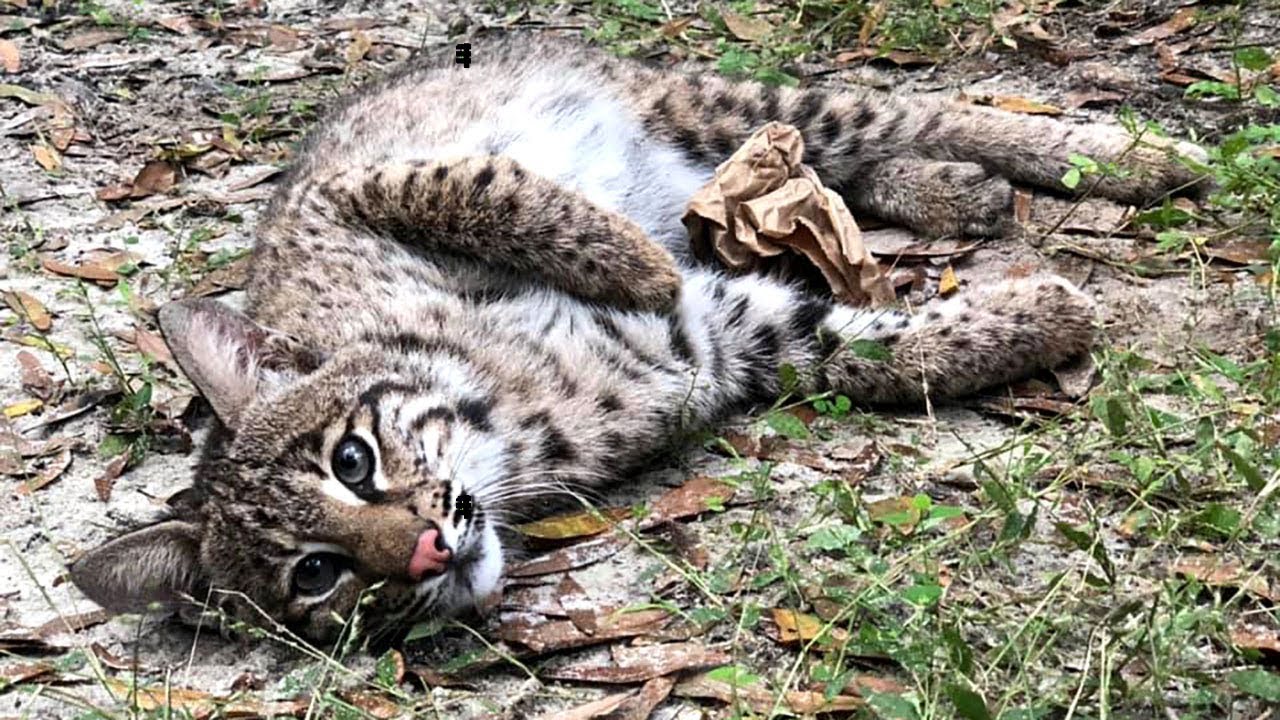
A spotted bobcat lies belly-up on sandy ground strewn with dry leaves, a barred foreleg curled above and its head upside down, one eye looking straight at the camera.

Footage: Big Cat Rescue · 3:12 · uploaded November 12, 2019
Written by My Crittercam · published November 6, 2026

The Story

A bobcat lies belly-up in sandy leaf litter, head upside down, one wide eye level with the lens. This is Flint, and he is not going back to the wild.

Rehabilitation was the plan. Then the work at Big Cat Rescue in Tampa, Florida, turned up the problem: Flint has deformed bones and a pelvic canal that is narrowed and collapsed. With that frame he could not eat large whole prey or survive on his own, and the sanctuary was granted permission to keep him as a permanent resident.

That diagnosis hits a bobcat where it lives. Lynx rufus is strictly a meat eater, taking mostly rabbits and hares, with rodents, birds, snakes, lizards and small deer besides. The hunt runs on stealth. A bobcat stalks, sets its back feet in the prints of its front feet to stay quiet, then pounces and kills with a bite to the vertebrae of the neck. It often covers 2 to 7 miles in an evening hunting and patrolling its territory. A cat that cannot eat what it catches has no margin out there.

The field marks on Flint are the real thing: a buff coat spotted and striped in brown and black, with a pale belly. Bobcats also wear ruffs of hair on the sides of the head like sideburns, black on the backs of the ears with white spots, and a short bobbed tail, black at the tip and white underneath.

In the wild, southeastern bobcats use bottomland hardwood forests and coastal swamps, and they are growing used to towns and suburbs there, though they are seldom seen.

Flint has drawn the easier hand. Most wild bobcats live five to 15 years; in human care the median is about 18. He seems to have accepted the trade. Tucked against his belly lies a crumpled paper bag, handled like the most important object in Florida.
Field Guide

Flint, a bobcat with deformed bones and a collapsed pelvic canal, sprawls belly-up with a paper bag at the Tampa sanctuary that now keeps him for good. Full field guide for the Bobcat

Common nameBobcat
Scientific nameLynx rufus
FamilyFelidae (cats)
Size65 to 105 cm long, tail adding 11 to 19 cm; 45 to 58 cm high at the shoulderAnimal Diversity Web, University of Michigan
Weight4 to 15 kg (8.81 to 33.04 lb); adult males in Washington weigh 20 to 30 poundsAnimal Diversity Web, University of Michigan · Washington Department of Fish & Wildlife
DietStrictly meat eaters; mostly rabbits and hares, also rodents, small deer, birds, snakes and lizardsAnimal Diversity Web, University of Michigan · Smithsonian's National Zoo and Conservation Biology Institute
LifespanMost bobcats live between five and 15 years in the wild; median about 18 years in human careSmithsonian's National Zoo and Conservation Biology Institute
Active whenMay be active at all hours, but studies consistently find them crepuscular (most active at dawn and dusk)Smithsonian's National Zoo and Conservation Biology Institute
RangeThroughout North America from southern Canada to southern MexicoAnimal Diversity Web, University of Michigan
Conservation statusIUCN Red List: Least Concern; NatureServe global rank G5; CITES Appendix IIAnimal Diversity Web, University of Michigan · NatureServe Explorer
Cam notes · Time of dayday
Cam notes · PlaceBig Cat Rescue, Tampa, Florida

Habitat

Behavior

Questions

How big will a bobcat like Flint get?

Bobcats weigh between 9 and 33 pounds (4 and 15 kilograms) and stand 1.5-2 feet tall at the shoulder. Larger animals are found in the north and smaller ones in the south.Smithsonian's National Zoo and Conservation Biology Institute

How long can a bobcat live in a sanctuary?

Most bobcats live between five and 15 years in the wild. In human care the median lifespan is about 18 years.Smithsonian's National Zoo and Conservation Biology Institute

What does a bobcat eat in the wild?

Bobcats mostly eat rabbits and hares. They may also eat squirrels, mice, small deer, snakes, lizards and domestic animals such as cats and poultry.Smithsonian's National Zoo and Conservation Biology Institute

Latest clips