The Story
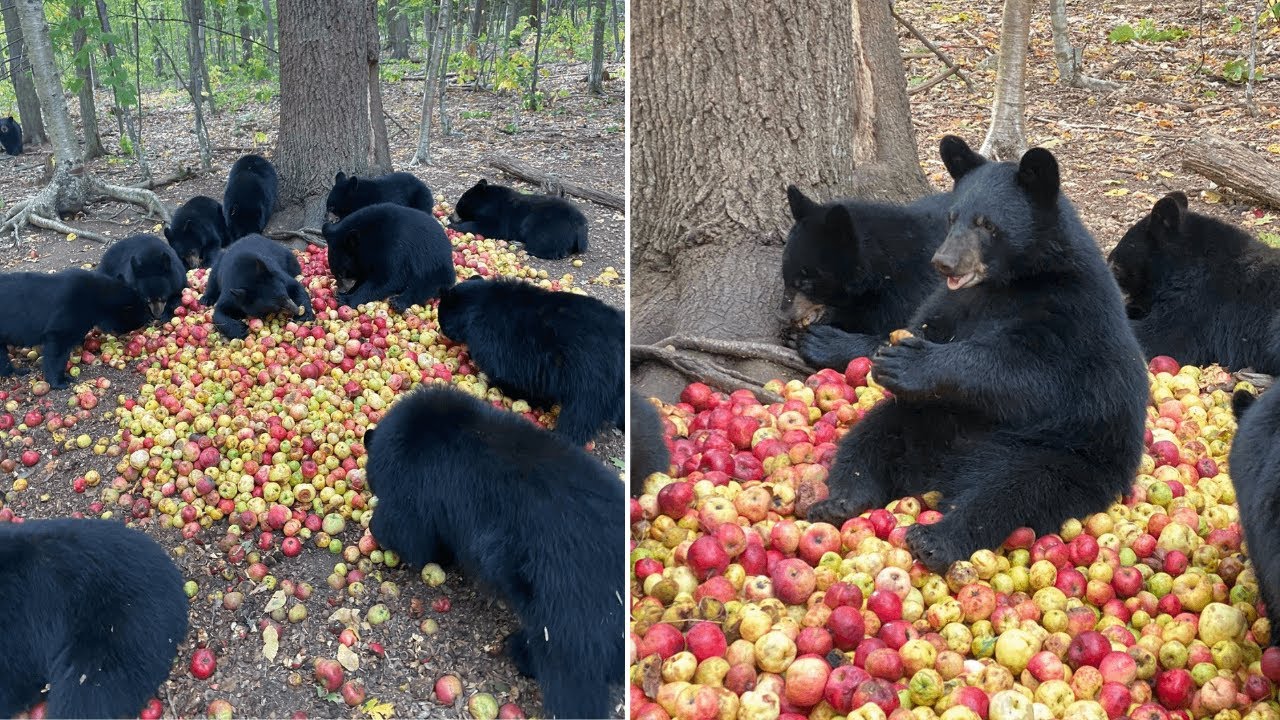
An American black bear cub sits back on a heap of apples at the foot of a big tree, holds an apple in both forepaws, mouth open. Around it, a low rumble rises from a crowd of cubs.
Orphaned and raised at a rehabilitation sanctuary, these cubs have been given a treat: apples the staff heaped on the forest floor. More than half a dozen pack in around the pile, most standing over the fruit with heads down. The one in front has simply sat down in it, hind feet planted in the fruit, a diner who has decided the table is also the chair.
A steady, motor-like hum, close to a purr, carries under the crunch of fruit. The clip's own name for it is the sound of contentment, and nothing on screen argues: young bears sitting in a mound of food, eating.
The sitting cub's ears are erect and rounded, and its muzzle is long, narrow and paler brown than the black body fur. Those marks matter more than colour, because black bears also come in cinnamon, blonde, blue-gray and even white.
Yellow leaves already litter the ground, and the season fits the menu. In fall a black bear's diet shifts to a mix of hard and soft mast, with nuts and acorns especially important. Before hibernation a bear can take in 12,000 to 20,000 calories a day, the equal of about 700 to 800 acorns.
Black bears are normally solitary, though groups do gather at feeding sites, and this pile has made one. In the wild a cub stays with its mother about 18 months; these cubs have none, so the sanctuary cares for them until they are ready to go back to the wild. By the last shots the pile has spread, apples rolled out across the forest floor, and several cubs are still at its far side, heads down.