American black bear field guide
Field Guide
| Common name | American black bear |
|---|---|
| Scientific name | Ursus americanus |
| Family | Ursidae (bears) |
| Size | About 3 ft at the shoulder; 5-7 ft standing upright. Total length 1400-2000 mm (males), 1200-1600 mm (females).National Park Service · Animal Diversity Web, University of Michigan |
| Weight | 100 to 600 pounds depending on age, sex, and season; males 47-409 kg, females 39-236 kg.National Park Service · Animal Diversity Web, University of Michigan |
| Lifespan | Can live to 30 years in the wild but most often about 10; NPS gives an average of 15-25 years.Animal Diversity Web, University of Michigan · National Park Service |
| Diet | Omnivore: grasses and forbs in spring, fruits in summer, nuts and acorns in fall, plus insects and carrion.Animal Diversity Web, University of Michigan · National Park Service |
| Active when | Generally crepuscular (dawn and dusk); breeding and feeding can shift this seasonally.Animal Diversity Web, University of Michigan |
| Range | Northern Alaska east across Canada to Labrador and Newfoundland, and south through most of the U.S. into central Mexico.Animal Diversity Web, University of Michigan |
| Conservation status | NatureServe: G5 (Globally Secure), reviewed 2016-04-05. IUCN Red List page could not be fetched.NatureServe Explorer |
Field Marks
- Compared with grizzlies: longer, less heavily furred ears, smaller shoulder humps, and a convex rather than concave face profile.Animal Diversity Web, University of Michigan
- Claws rarely grow more than 1 1/2 inches long, and the facial profile is straight, which separates it from brown bears.Alaska Department of Fish and Game
- Usually has a pale muzzle that contrasts with the darker body fur.Animal Diversity Web, University of Michigan
- Erect, rounded ears; a long, narrow, brown muzzle; and a short tail.New York State Department of Environmental Conservation
- Colour is not a reliable mark: black bears can be black, cinnamon, blonde, blue/gray, or even white.National Park Service
- Tracks show five toes, claw marks, and a large heel pad; hind tracks may reach 7 inches long by 5 inches wide.New York State Department of Environmental Conservation
Habitat
- Uses bed sites in forest habitat, usually a simple shallow depression in the forest leaf litter.Animal Diversity Web, University of Michigan
- In the Smokies, dens are often in hollow stumps, tree cavities, or dense brush piles; many bears there den high above ground in standing hollow trees.National Park Service
- In Yosemite, bears hibernate in hollow trees or logs, under the root mass of a tree, or in caves formed by a jumble of large rocks.National Park Service
- Great Smoky Mountains National Park holds roughly 1,900 bears, about two bears per square mile.National Park Service
- In Maryland, bears are most common in the four westernmost counties: Allegany, Frederick, Garrett, and Washington.Maryland Department of Natural Resources
Behavior
- Diet shifts by season: grasses and forbs in spring, shrub and tree fruits in summer, and a mix of hard and soft mast in fall.Animal Diversity Web, University of Michigan
- Roughly 85% of a Great Smoky Mountains bear's diet is plant material; nuts and acorns are especially important in fall.National Park Service
- In Minnesota the diet turns to ants and ant pupae in June, berries in summer, and acorns and hazelnuts in autumn.Minnesota Department of Natural Resources
- Bears can consume 12,000-20,000 calories a day to prepare for hibernation, equal to 6-7 pounds of black oil sunflower seed or about 700-800 acorns.Minnesota Department of Natural Resources
- Normally solitary, except mothers with cubs, breeding pairs in summer, and groups gathered at feeding sites.Animal Diversity Web, University of Michigan
- Mating generally peaks from June to mid-July, when the sexes coexist briefly.Animal Diversity Web, University of Michigan
- Delayed implantation: the fertilized egg does not implant until autumn, and embryos develop only in the last 10 weeks of pregnancy.Animal Diversity Web, University of Michigan
- Has an exceptionally keen sense of smell (better than a dog), with reasonable eyesight and hearing.Minnesota Department of Natural Resources
- Communicates with body and facial expressions, sounds, touch, and scent marking; scent marks advertise territory boundaries.Animal Diversity Web, University of Michigan
- Males hold territories large enough to supply food that overlap the ranges of several females.Animal Diversity Web, University of Michigan
- NY DEC: bears are excellent climbers and can run at speeds up to 25 mph or more.New York State Department of Environmental Conservation
- Great Smoky Mountains NPS: non-retractable claws and a flat-footed gait help them climb trees, swim efficiently, and run up to 30 miles per hour.National Park Service
- Litters number one to five cubs, usually two or three; newborns weigh 200 to 450 grams each.Animal Diversity Web, University of Michigan
- Cubs stay with the mother about 18 months, or until she is ready to mate again.National Park Service
- Cubs may be killed by large predators such as wolves and mountain lions, but most black bears that are killed, both young and adults, are killed by humans.Animal Diversity Web, University of Michigan
- In Minnesota, bears make huffing, snorting, and jaw-popping sounds when nervous or distressed; cubs hum when nursing and squeal when frightened.Minnesota Department of Natural Resources
Winter
- Bears may spend up to six months in hibernation, during which they do not eat, drink, or expel waste.National Park Service
- They recycle body wastes and wake in spring with little loss of muscle mass or strength.Minnesota Department of Natural Resources
- Smokies bears typically settle into dens between late October and mid-December and enter torpor, a lighter form of hibernation.National Park Service
- Alaska bears hibernate about seven months in colder regions, but only two to five months, or not at all, in warmer coastal areas.National Park Service
- Cubs are born mainly in January and February, commonly while the mother hibernates, and nurse in the den all winter.Animal Diversity Web, University of Michigan
Questions
How big is a black bear?
About 3 feet at the shoulder and 5-7 feet standing upright. Weight runs from 100 to 600 pounds depending on age, sex, and season.National Park Service
Are black bears always black?
No. They can be black, cinnamon, blonde, blue/gray, or even white, and western populations are more often brown, cinnamon, or blonde.National Park Service · Animal Diversity Web, University of Michigan
Are black bears dangerous to people?
They are by nature wary of people and not normally aggressive, but are large, powerful and surprisingly fast-moving. Bear attacks are rare; most bears are only interested in protecting food, cubs, or their space.Minnesota Department of Natural Resources · National Park Service
What should I do if a black bear attacks?
Do not play dead; try to escape to a car or building. If you cannot, fight back with any object, aiming kicks and blows at the face and muzzle.National Park Service
Why is the bear standing up or charging?
A standing bear is usually curious, not threatening. Bears may bluff by charging and then turning away at the last second.National Park Service
Why do bears raid bird feeders?
Bears are very fond of suet and bird seed, especially black oil sunflower seed, which they can smell from a long distance. Once a bear finds a food source it returns repeatedly.Vermont Agency of Natural Resources · Minnesota Department of Natural Resources
When should I take my bird feeders down?
Vermont recommends taking feeders down by April 1, and Maryland advises removing them from April through November. Also secure garbage, feed pets indoors, and clean grills.Vermont Agency of Natural Resources · Maryland Department of Natural Resources
What happens to bears that get used to backyard food?
Maryland DNR says exposure to easy human food can lead to a lifelong change in behavior that puts bears at risk. NY DEC warns unintentional feeding may ultimately be deadly for the bear if it becomes a greater threat to people and property.Maryland Department of Natural Resources · New York State Department of Environmental Conservation
How small are the cubs?
Cubs are born blind and nearly hairless, weighing under a pound (8 to 12 ounces in the Smokies). They reach about five pounds by the time they leave the den in late March or April.Alaska Department of Fish and Game · National Park Service
Where do black bears sleep in winter?
In hollow trees or logs, under the root mass of a tree, in caves formed by a jumble of large rocks, or in dense brush piles. Many Smokies bears den high in standing hollow trees.National Park Service · National Park Service
Clips
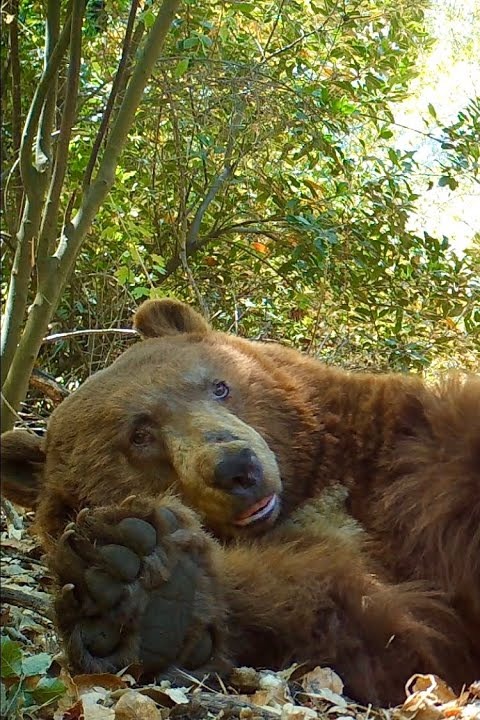 Wilford the black bear digs a bed, then naps
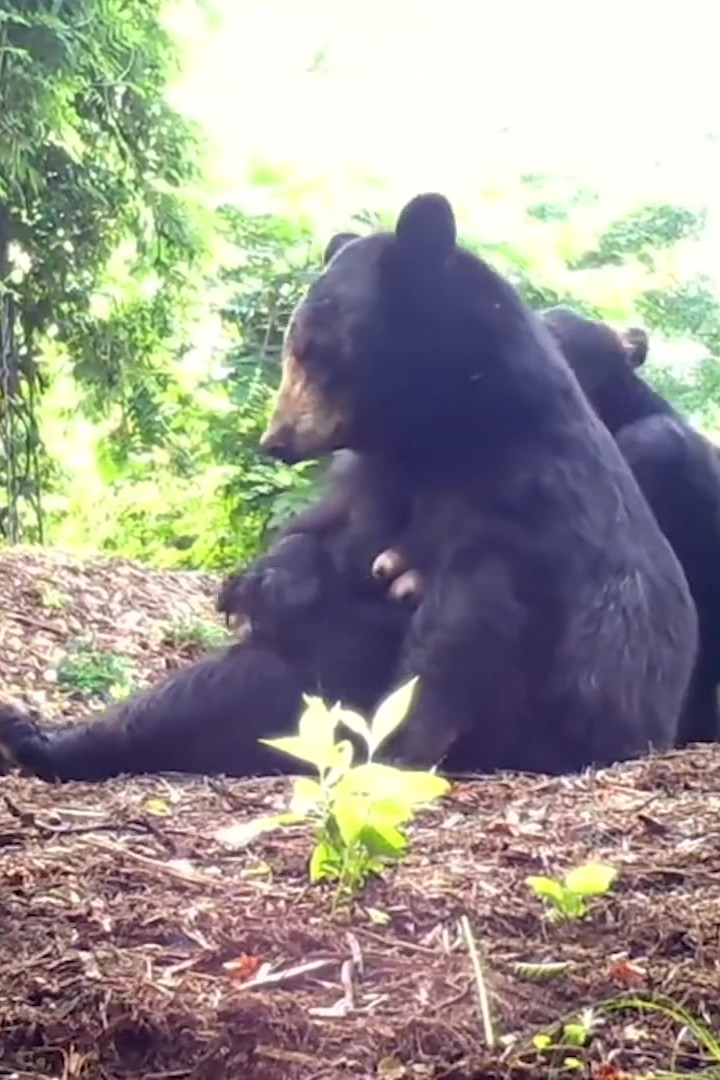 Black bear cub stands tall to grab a hammock
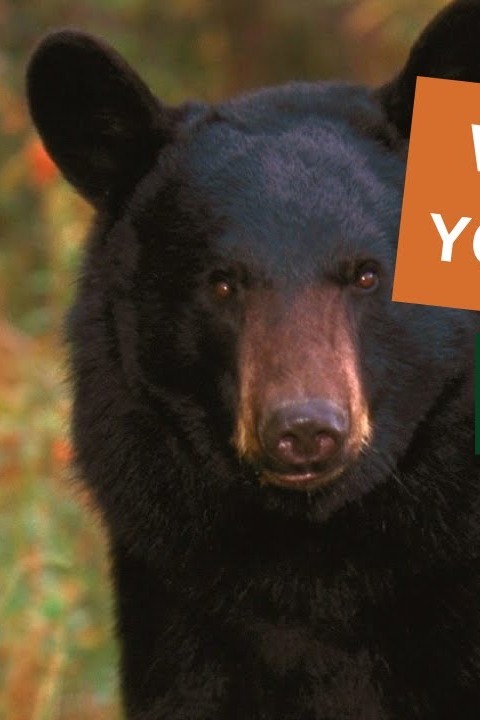 Black bear face to face in autumn brush
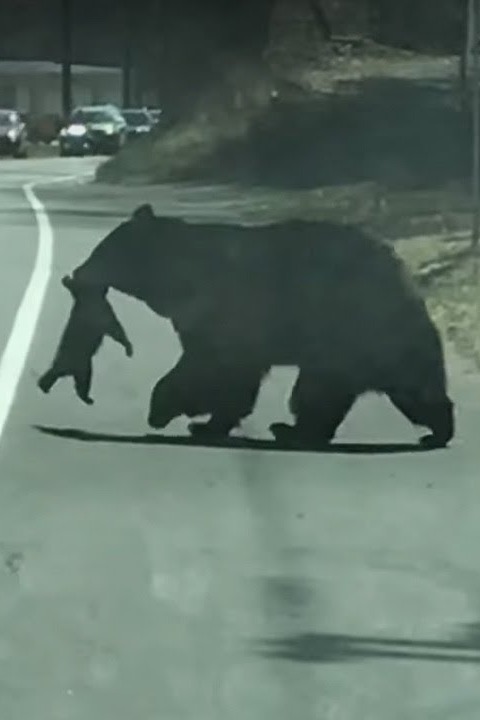 Black bear tries to cross a road with four cubs
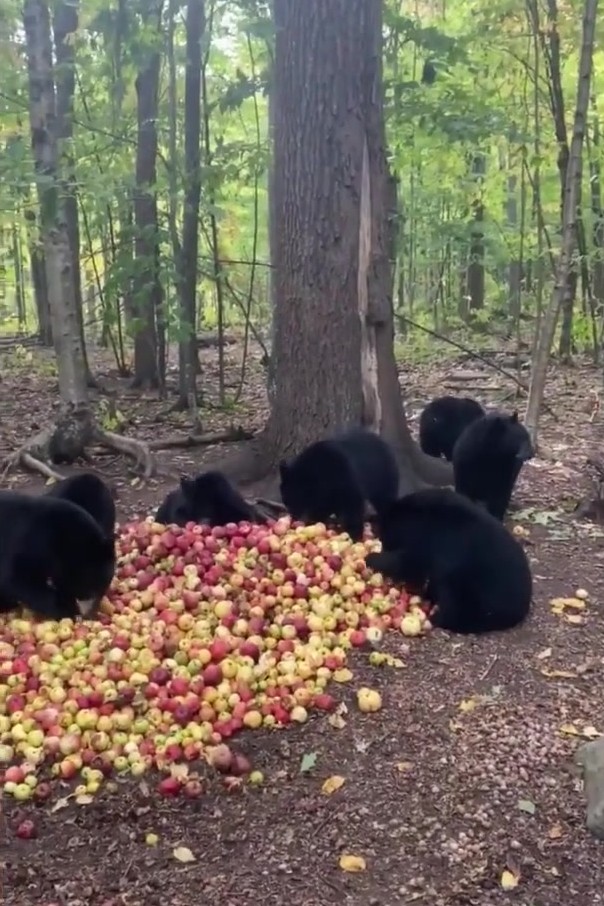 Black bear cubs hum over a heap of apples
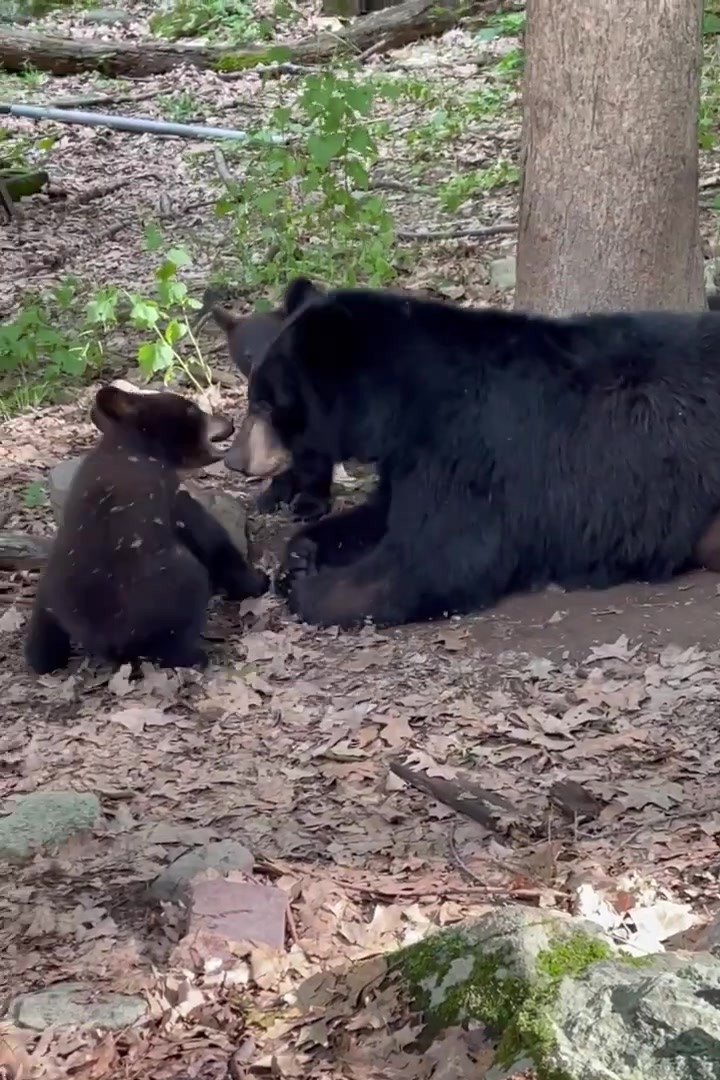 Black bear cub leaves its mother to touch a shoe
Wilford digs himself a bed in the Angeles National Forest on a July morning and naps in it for four hours.
Two black bear cubs rise on their hind legs to reach a new hammock that a woman hung in her wooded yard for the visiting bear family.
An Adirondack Mountain Club tip for meeting a black bear: measure your distance with a thumb, guard your food, and stand tall if the bear stays.
In Winsted, Connecticut, a black bear mother carries and herds her four cubs back and forth across a road, trying to get the whole litter over together while cars wait.
At a rehabilitation sanctuary, a group of orphaned black bear cubs settles into a heap of fall apples and keeps up a low, purring hum while they eat.
At Highland Lakes, New Jersey, a black bear cub breaks off play with his mother and sibling, walks up to the filmer, touches a shoe and goes back to her.
Sources
- Ursus americanus (American black bear), Animal Diversity Web, University of Michigan
- Black Bears, National Park Service
- Ursus americanus - American Black Bear, NatureServe Explorer
- Living with bears, Minnesota Department of Natural Resources
- Black bear (Ursus americanus), Minnesota Department of Natural Resources
- Bear safety, National Park Service
- Black Bears - Great Smoky Mountains National Park, National Park Service
- Black Bear, New York State Department of Environmental Conservation
- DEC Issues Guidance to Reduce Conflicts with Bears, New York State Department of Environmental Conservation
- Remove Bird Feeders by April 1, Vermont Agency of Natural Resources
- Black Bear Species Profile, Alaska Department of Fish and Game
- Bears - Yosemite National Park, National Park Service
- Black Bears Emerging from Winter Dens in Search of Food; Marylanders Advised to Remove Backyard Bear Attractants, Maryland Department of Natural Resources