The Story
The longer this trail camera runs, the fewer deer it sees. Set in late winter where trails converge in the Alabama woods, it logs white-tailed deer in numbers at first, and over six months they thin to the occasional visit.
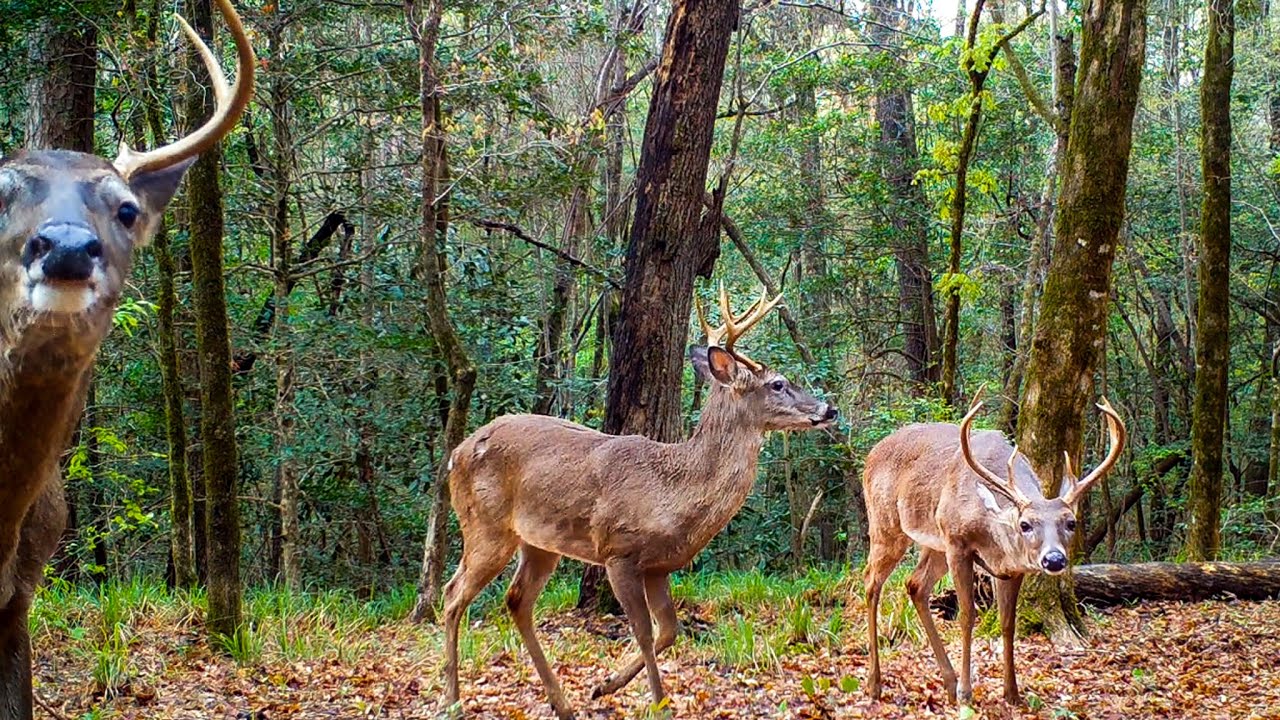
One frame holds three bucks at once. The nearest stands so close that his head fills the left edge, black nose aimed at the lens, one long curved antler running out the top of the picture. The white band behind his nose and the white chin are field marks of the species. Behind him two more bucks stand on the fallen leaves, one in profile, the other staring straight back.
The filmer's explanation runs on the calendar. In late winter this junction was still a popular spot, with bucks traveling, recovering from the rut and more active than in summer. Winter is the lean stretch: fat that can make up 10 to 25 percent of body weight by late fall supplements poor browse.
Then food availability changed the math. Deer need different things at different times of the year, and deer mostly left this area for their summer patterns. The species' diet shifts with the seasons: green plants in spring and summer, acorns, corn and other nuts in fall, bark, buds and twigs in winter. A trail junction that suits one season owes nothing to the next.
The cover itself looks right. Ideal habitat pairs dense thickets for hiding with edges that supply food, and here the understory runs thick between mossy trunks.
The camera keeps recording anyway. Raccoon, wild hog and turkey vulture also turn up in the footage. As for the deer, the filmer expects a great spot as the rut approaches later in the year. Before and during breeding, bucks rub antlers on trees and paw scrapes under a licking branch, leaving gland secretions to communicate. Whether that happens here is the deer's call, and nobody has consulted them.