The Story
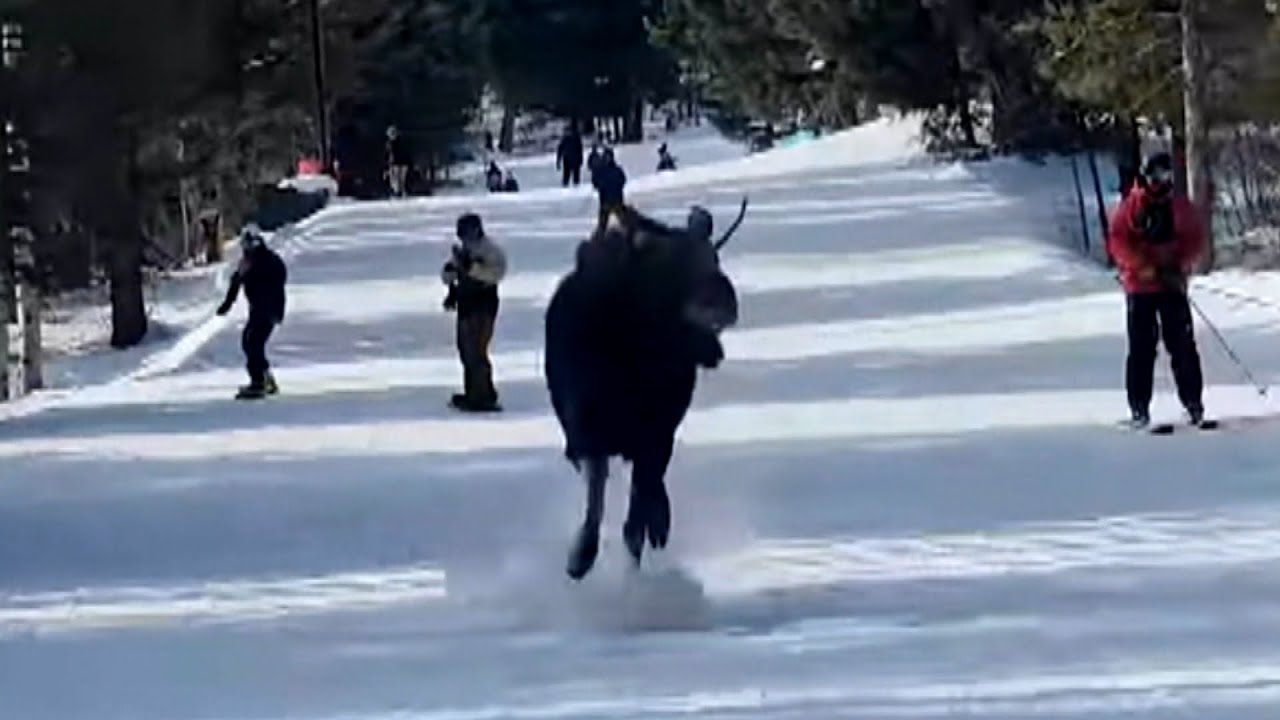
Skiing backwards down a run at Jackson Hole Mountain Resort in Wyoming, one man keeps his camera on a moose at full speed, barreling down the slope toward him.
His group has only just come back to the slopes after lunch. One of them passes the animal first and does not see it, eyes on the hill, until he hears the others yell. Moose.
The man going backwards calls out a warning to the skiers around him, and it is short: go faster. Sound advice, and hard to follow. Moose can run 35 miles per hour, and this is the largest member of the deer family. The Alaska Department of Fish and Game says adults can range from 800 to 1,600 pounds. Snow sprays at this one's hooves as the long legs reach down the run.
Whether this is a chase is harder to call. The same agency says moose usually flee when threatened, though they can turn aggressive when harassed. Its warning signs are raised hairs on the hump, ears laid back, lip licking or a slow approach. Nobody skiing backwards in front of a moose has much time to study its hump, and a slow approach is plainly off the table. The agency's advice for a real charge is to run and get behind something solid, such as a tree. Here the trees stand along the edge of the run.
Moose on a hill are usually standing, one of the group says, picking at trees or going by at a slow walk. He has never seen one at full speed. That fits the winter menu. Moose eat large quantities of willow, birch and aspen twigs through fall and winter, so a moose at a tree is a moose at work.
In the end the moose settles the matter itself and makes its way back into the woods.