My Crittercam
My Crittercam › Red fox

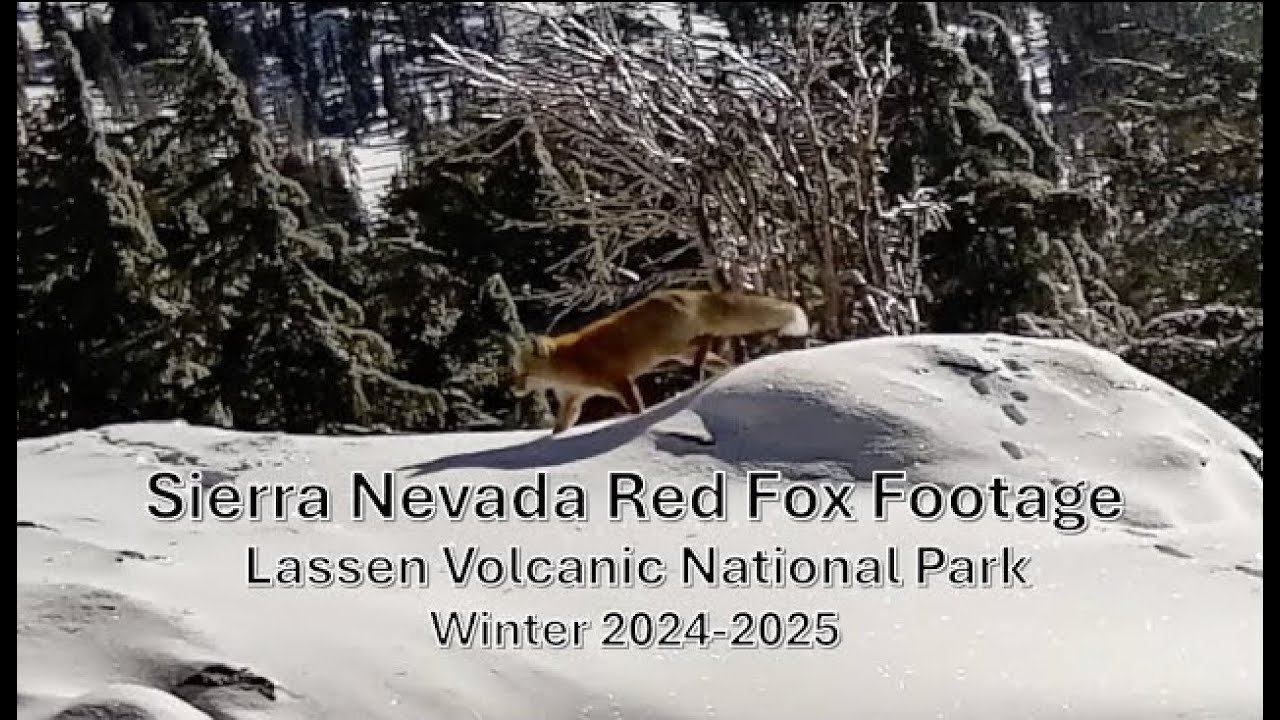
Sierra Nevada red fox walks its sunlit snow perch

A red fox walks left along a sunlit, snow-covered crest, its bushy tail running off the right edge of the frame, in front of frost-coated brush and dark conifers, with large white outlined title text, cut off at both sides, across the lower third.

Footage: Randy Robbins Photography · 3:23 · uploaded June 14, 2025
Written by My Crittercam · published November 6, 2026

The Story

Winter sun lights a snow-capped rock high in the Mt. Lassen area, and a Sierra Nevada red fox walks its crest, tail out straight behind. Dark conifers and frost-stiff brush stand at its back.

A trail camera caught this at roughly 8,500 feet in Lassen Volcanic National Park in November and December of 2024. The filmer, working under a park permit, has spent three years after the small population of Sierra Nevada red foxes around Mt. Lassen. This was the second winter of leaving cameras up high, and the aim is practical: narrow down where to put high-resolution camera traps.

The outcrop draws repeat visits, and on top of it a fox stretches and curls up in full sun. A bed in the open on a winter mountain looks like a poor choice. For a red fox it is the preferred one. The species likes to sleep in the open even in winter and treats a den mainly as a nursery. In cold wind it wraps its long tail over the bare skin of its nose and foot pads.

Mountain red foxes in the Sierra Nevada carry a dense winter coat, and fur grows over the toe pads so each foot works like a snowshoe. This one also wears the reddish coat and the long, bushy, white-tipped tail that mark any red fox.

Being out in daylight is less odd than it looks. Red foxes keep mostly to dawn, dusk and night, yet daytime sightings are not unusual, and winter tilts the clock further. Voles and mice grow more active by day beneath deep snow, so foxes turn more day-active to match. A red fox can hear a vole chewing as far as 100 feet away, and under as much as 3 feet of snow.

A sunny rock makes a sound place to spend a winter day. For the filmer, a clip like this is the point of the whole exercise: a fox, a spot and a season, logged toward where the high-resolution traps should go.
Field Guide

On a sunlit, snow-capped rock at about 8,500 feet in Lassen Volcanic National Park, a Sierra Nevada red fox walks the crest, then stretches and curls up in the winter sun. Full field guide for the Red fox

Common nameRed fox
Scientific nameVulpes vulpes
FamilyCanidae (dog family (canids))
SizeHead and body 455-900 mm, tail 300-555 mm; adults 14-20 in tall (Isle Royale); 39-43 in long including tail (Connecticut)Animal Diversity Web, University of Michigan · National Park Service · Connecticut Department of Energy & Environmental Protection
Weight3 to 14 kg range-wide; 7 to 15 lb in Connecticut, averaging 10 to 11 lb; males slightly heavierAnimal Diversity Web, University of Michigan · Connecticut Department of Energy & Environmental Protection
DietOmnivore: mostly rodents, rabbits, insects and fruit, plus birds, eggs, carrion and garbage; eats 0.5 to 1 kg a dayAnimal Diversity Web, University of Michigan · Connecticut Department of Energy & Environmental Protection
Active whenYear-round, no hibernation; mainly dawn, dusk and night, but daytime sightings are not unusualConnecticut Department of Energy & Environmental Protection · Animal Diversity Web, University of Michigan
LifespanAverage 3 years in the wild; 10 to 12 years known in captivityAnimal Diversity Web, University of Michigan
Conservation statusIUCN Red List: Least Concern (as listed on NatureServe Explorer); NatureServe: G5 (Secure), N5 in the United States and CanadaNatureServe Explorer
Cam notes · Cameratrail camera left out at high elevation through the winter
Cam notes · Time of daydaytime
Cam notes · SeasonNovember and December 2024
Cam notes · PlaceLassen Volcanic National Park, about 8,500 feet

Habitat

Behavior

Questions

Is it unusual to see a red fox out in daylight?

Red foxes are mainly active at dawn, dusk and night, but daytime sightings are not unusual. In winter, voles and mice under deep snow are more active by day, so foxes become more day-active too.Connecticut Department of Energy & Environmental Protection · Animal Diversity Web, University of Michigan · National Park Service

Why would a fox curl up on an open rock in winter instead of a den?

Red foxes prefer to sleep in the open, even in winter, and use the den mainly as a nursery, though also in wet weather. In cold wind a fox covers the bare skin of its nose and foot pads with its long tail.Minnesota Department of Natural Resources · SUNY College of Environmental Science and Forestry · National Park Service

How high up the mountains do red foxes live?

Red foxes use habitats from sea level up to 4500 m, including mountains, forest and tundra. Sierra Nevada mountain foxes have a dense winter coat and fur over the toe pads that works like a snowshoe.Animal Diversity Web, University of Michigan · National Park Service (Yosemite National Park)

Latest clips