The Story
Crows have been shouting through the woods all morning, and when the birder finally walks toward the noise, the reason sits in a lichen-hung tree and stares back: a great horned owl, her first.
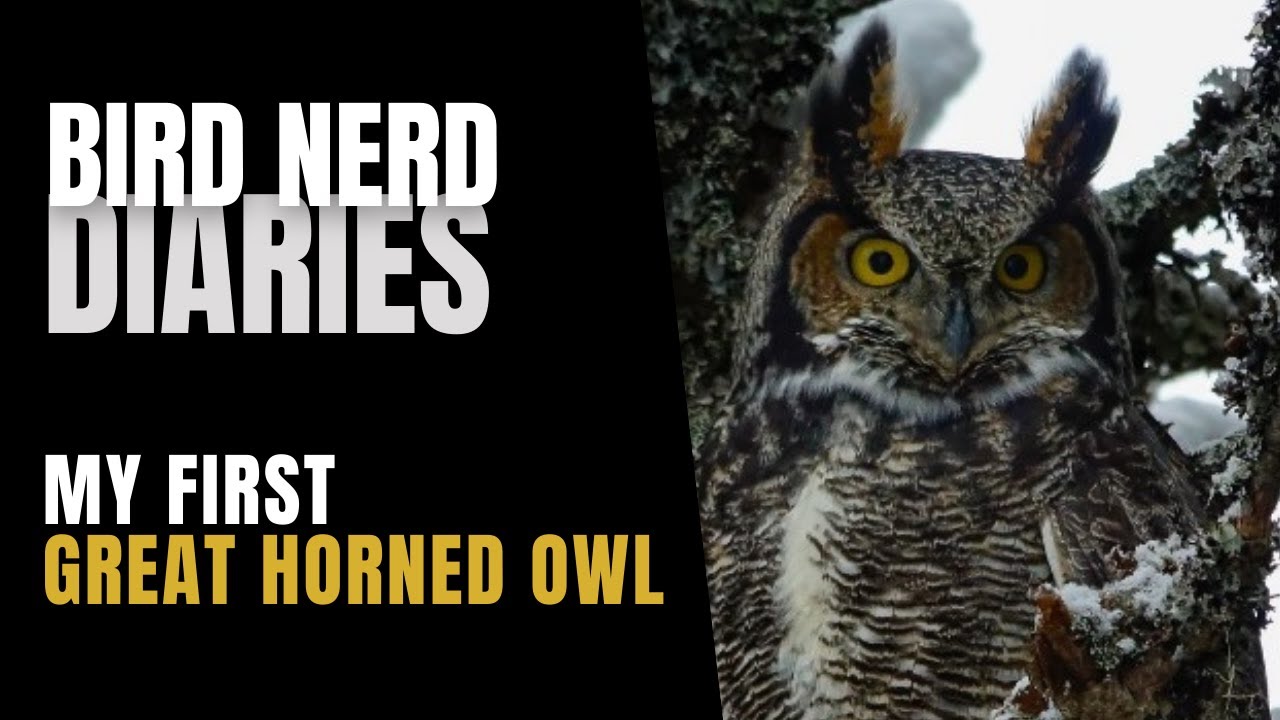
Up close it fills the frame. Two feathered tufts stand off a broad, flat head, dark with rusty edges. The eyes are a deep yellow, there is a white band across the throat, and the breast is barred crosswise in brown and black. Those tufts are feathers, not horns, and on this species they usually run darker than the rest of the head.
The crows have their reasons. Great horned owls take some birds up to the size of geese, ducks, hawks and smaller owls, and crows sit on both sides of the ledger: they sometimes eat great horned owl eggs. The birder puts the alarm in human terms, a grizzly strolling into the backyard. Nobody would sit quietly through that either.
In daylight the owl is off duty. Great horned owls hunt mostly at night, sometimes at dusk, working from a high perch and dropping onto prey with their talons, guided by extremely good hearing and good low-light vision. This one, caught out in daylight, sits on its perch and stares into the lens.
After supper she goes back for another look. No crows now, only a blue jay calling, and the call leads straight to the owl in full view, not far from that jay pair's nest. The nesting jay dives at it, getting closer than seems wise for a bird its size. Soon afterward the owl leaves, and the next morning there is no sign of it.
Where it went is anyone's guess. The species has no regular migration, though individuals may wander long distances in fall and winter. Great horned owls breed from November to April, often in an old hawk, eagle, crow or heron nest, and a woods full of nesting jays has every reason to want this visitor gone.