The Story
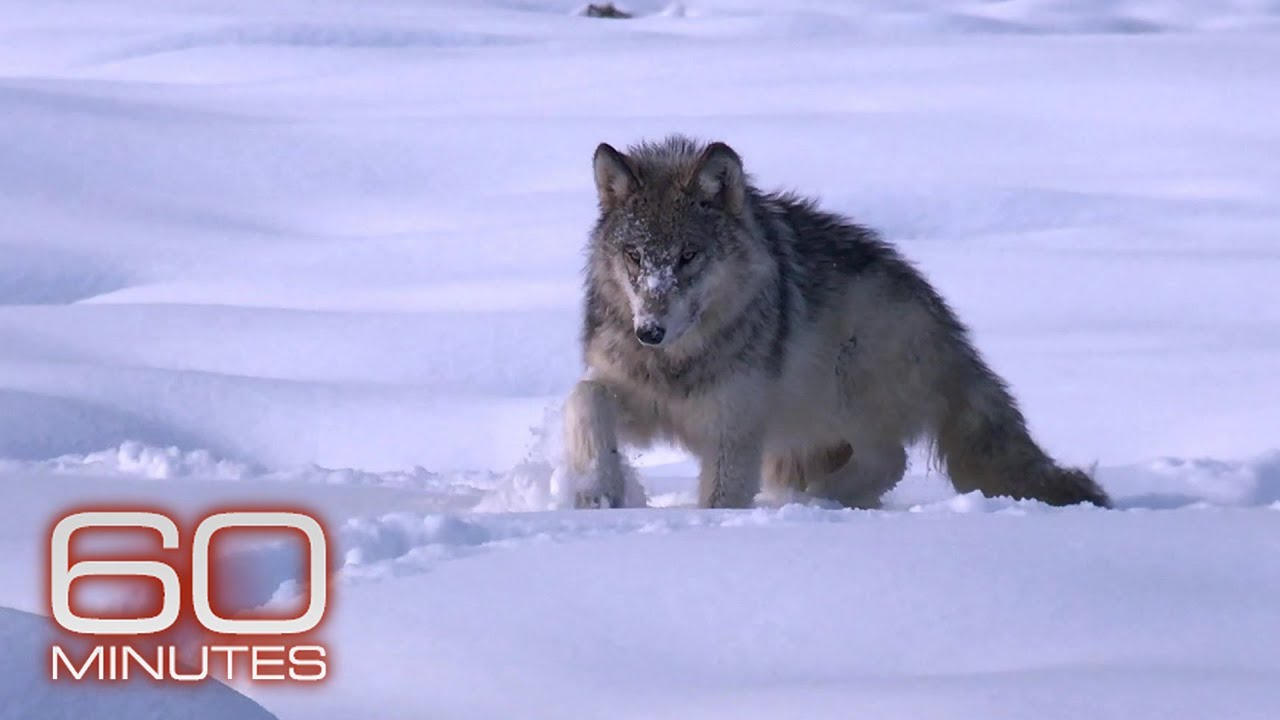
A gray wolf wades through a Yellowstone drift with snow crusted on its muzzle, one forepaw punching forward through the powder. Around it the park is at its hardest: sub-zero cold, howling wind and six feet of snow.
This is winter as a 60 Minutes crew found it in 2018, when every animal in the park, from bison and elk to foxes, works for each morsel. The wolf's coat reads right for the place. Its grizzled gray matches half of Yellowstone's wolves; the other half run black, and a white one is a rare find.
That rarity shows up on a ridgeline about two miles off. Through spotting scopes, a whole pack strings out against the snow: six blacks, a white wolf and at least one gray. A gray female leads them west while the ones behind her play. Eight or nine wolves puts them close to the park's average pack of 9.8, a family group of a breeding pair, their pups, perhaps last year's young and sometimes older wolves.
Spectators stand in the frigid air for that brief, distant look, some of them having come all the way from Germany. Daylight sightings run against type for the species. Gray wolves are mainly nocturnal, and their movements usually happen at night.
None of this existed a generation earlier. Wolves were trapped, poisoned and hunted until not one was left in the American West. The first gray wolves captured in Canada were carried into the park on January 12, 1995, under armed guard, and 41 were released over three years. By 2018 the count stood at 96 in 10 packs.
Those packs live on elk, which make up over 96% of winter prey here, and each wolf kills about 18 to 22 a year. A pack picks the calves, the old and the injured, prey it can actually pull down. Their lives run short: a Yellowstone wolf lives four to five years on average.