The Story
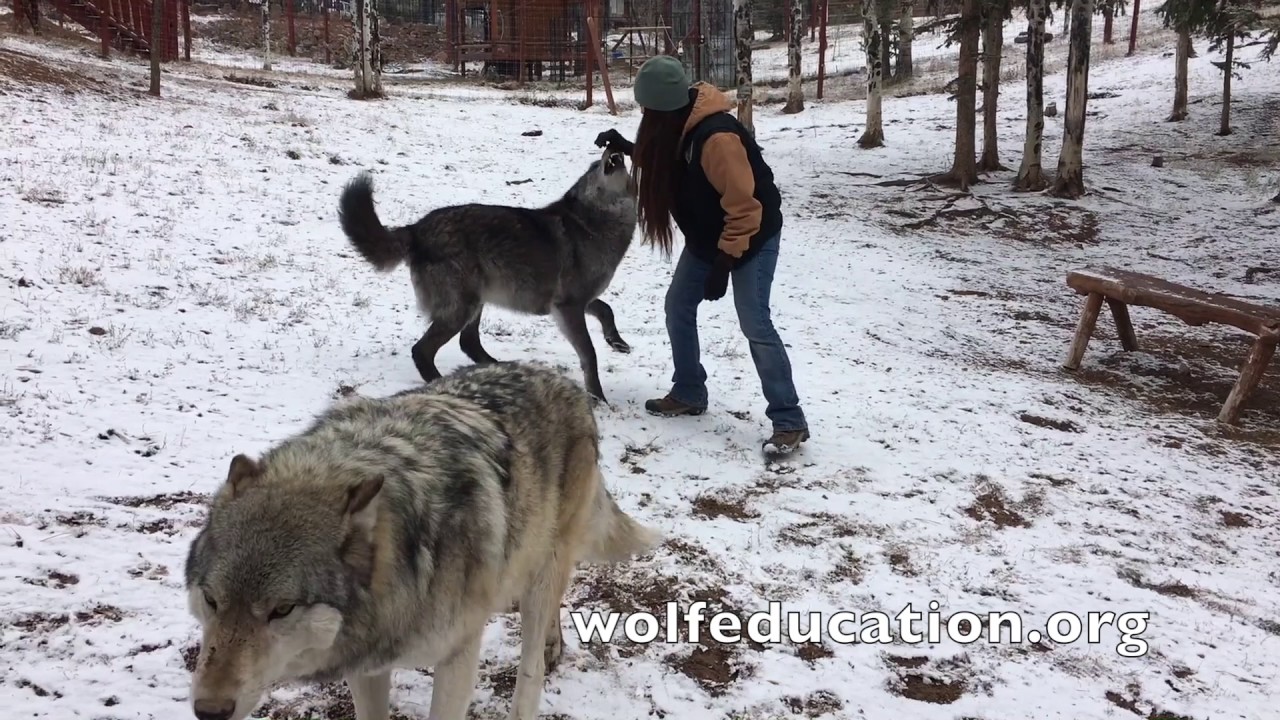
Fresh snow covers the Colorado Wolf and Wildlife Center, and a dark gray wolf stretches its muzzle straight up to a keeper's gloved hand. A second wolf, paler and grizzled, ambles toward the lens with its head low, close enough to fill the frame.
Both are gray wolves, Canis lupus, and at this range the field marks read easily. The ears are rounded and relatively short. The muzzle is large and blocky, nothing like the petite, pointed snout of a coyote. The near animal wears the common coat, buff-tan grizzled with gray and black, while its companion is far darker.
The keeper's subject for the day is cold, and how wolves are built for it. Part of the answer lies under the outer coat. Each fall a dense undercoat grows beneath the outer guard hairs; the wolf sheds it by July and starts regrowing it from mid-August. The feet matter too. They are big enough to work like snowshoes, and hair between the toes keeps snow from freezing there.
One of the two is nine years old, and still keen for a romp. That is a respectable age for the species. Gray wolves live up to 13 years in the wild and 15 in captivity, and the average Yellowstone wolf lasts only four to five.
Then the lesson gives way to play, the half of the day the center's own billing promises. A wolf that wants to play dances and bows. Here the keeper is the one doing the inviting. The wolves have the better end of the weather, too. For them a snowy day is the comfortable season and summer here is the hard one. Of the three in the frame, only the keeper came without fur.
In the wild, Minnesota wolves spend most of their fall and winter time sleeping, resting or traveling, and little of it feeding. These two, with fresh snow underfoot and a willing playmate, have other plans.