The Story
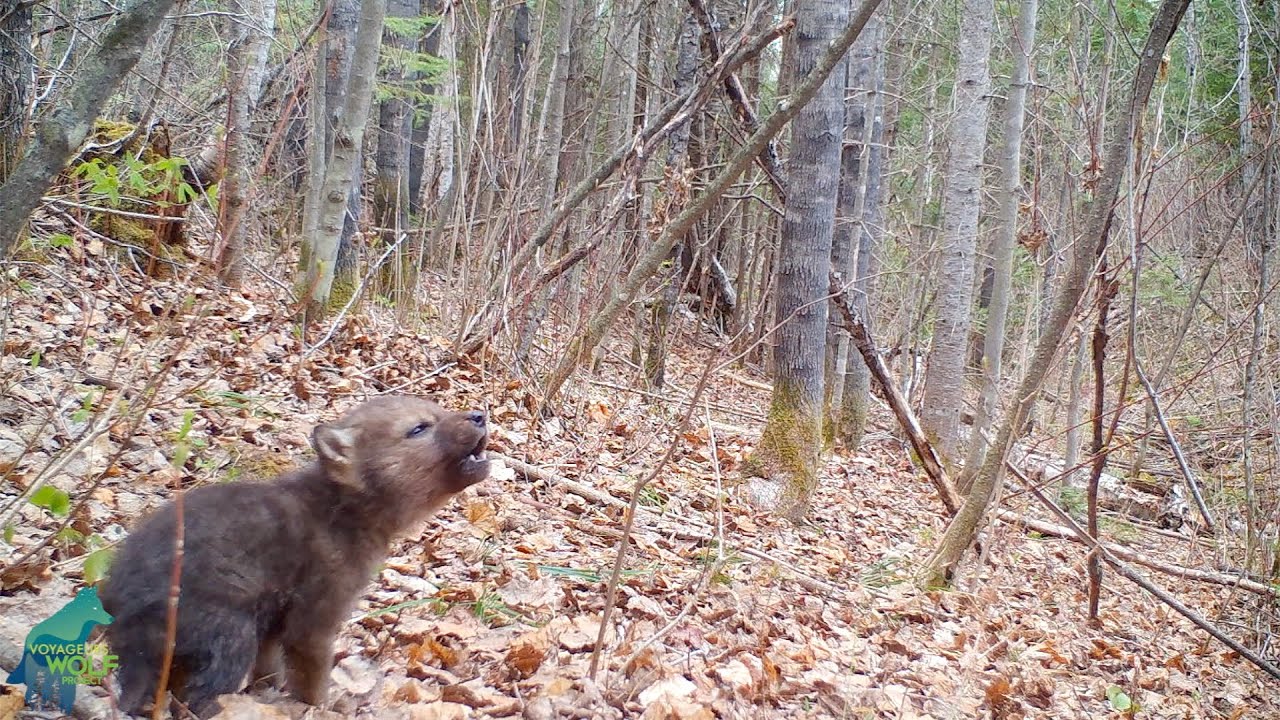
A gray wolf pup about four weeks old stands in the dead leaves of a Minnesota forest, points its muzzle at the canopy and howls. It is one of its first, and it comes out far louder than anything that size has a right to produce.
The Voyageurs Wolf Project caught the moment by daylight in the Northwoods of Minnesota. The pup is alone in the frame, a round-headed ball of dusky fuzz with its head tipped back and its mouth open. It does not stop at one. Howl follows howl, pushed hard enough that the sound breaks up in the microphone.
Howling is how wolves talk across distance. In forest a howl carries about 11 kilometers, or 6.6 miles, and wolves put it to many uses. A defensive howl keeps the pack together, warns strangers off and protects pups and kills. A social howl helps wolves find one another, rally, and possibly have fun. Which one this pup has in mind, the footage cannot say.
Wolf pups start life in a den, dug as much as ten feet into well-drained soil or tucked into a hollow log, a cave or an old beaver lodge. At six to eight weeks they are usually moved to rendezvous sites, usually near water. At four weeks, this one has a little way to go.
This pup is still short of weaning, which comes at about six weeks. After that the family does the feeding. A pack is a family group: a breeding male and female, their pups, perhaps last year's young and sometimes older wolves. Adults eat at a kill, come back and bring the meat up when the pups jump and nip at their muzzles. In northern Minnesota summers, they mostly hunt small prey such as beavers and deer fawns.
The recital ends without ceremony. The pup stops, jumps up and dashes off with its tail wagging. By freeze-up, if the year runs the usual way, it will be the size of a small adult and able to travel with the pack.