The Story
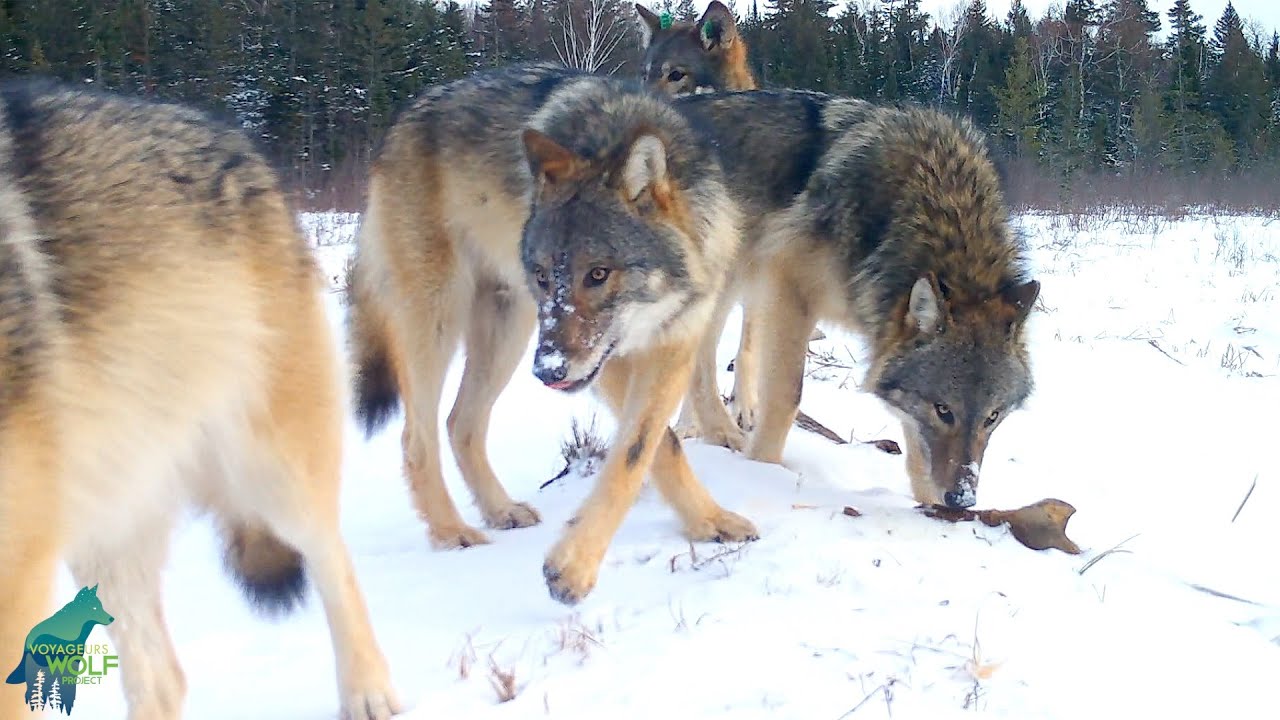
Noses down, one after another, a pack of gray wolves works over a patch of snow in front of a trail camera in northern Minnesota. This is the Cranberry Bay Pack, in the remote forest of Voyageurs, in early December 2021.
They come in thick-coated and grizzled, buff and tan through the legs, gray and black across the back, a classic gray wolf coat. Under those guard hairs sits a dense undercoat that wolves grow each fall and shed by July. Each animal stops where the last one stopped and puts its nose to the ground. Whatever lies there, nobody wants to be the wolf that skipped it.
Leading them is a weathered gray male the Voyageurs Wolf Project knows as V083, the breeding male of the pack and its famed beaver killer. The project credits him with 42 beavers in 2020. That fits the local menu, since in northern Minnesota summers wolves mostly hunt small prey such as beavers and deer fawns.
Seven wolves made up the pack that early winter, more than the four or five the project counts as average for its area. The reason was simple. All four of the year's pups survived to winter. Packs are family groups, a breeding male and female with their pups, perhaps last year's young and sometimes older wolves. By freeze-up in the Voyageurs area, pups are the size of small adults and can travel with their parents and the rest of the pack.
Daylight footage like this is a small stroke of luck. Wolves are mainly nocturnal, and in fall and winter Minnesota wolves spend most of their time sleeping, resting or traveling, with little time spent feeding.
The pack did not hold at seven. Sometime in mid-to-late winter it dropped to six, through a death or a wolf dispersing, which the project calls common. V083 and his mate kept leading it, and in 2022 they likely produced another litter, though only trail camera footage could confirm it.