The Story
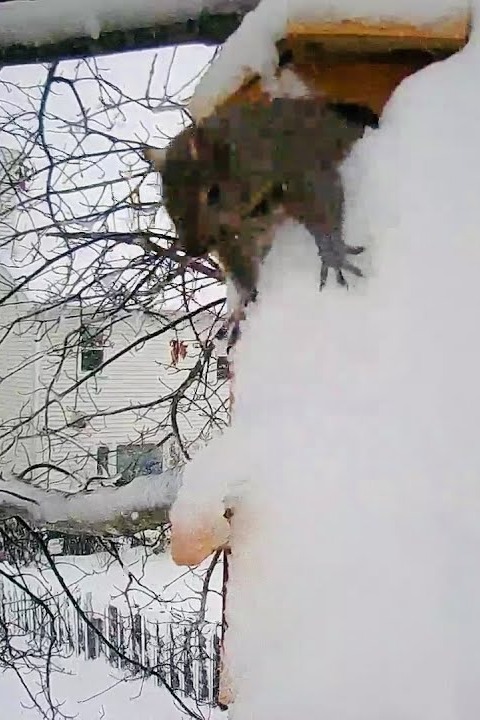
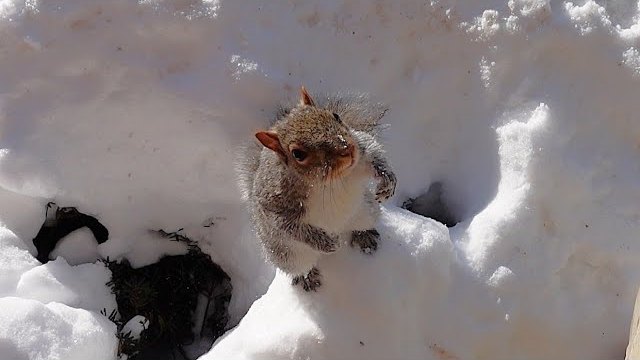
A gray squirrel rears up out of a snowbank, nose frosted white, one forepaw curled at its chest, and stares straight up at the camera. It is an eastern gray squirrel, and the drift around it is pocked with tunnels.
The yard under the filmer's window has vanished. Where shrubs should be there is a white wall, broken by dark holes where the squirrels tunneled through, with sprigs of evergreen poking out at the edges. The squirrel holds its upright pose in full sun, facing the window where the nuts come from.
The field marks hold even in glare. The coat is grizzled gray with cinnamon tones, the chest and belly pale. That white underside matters: the larger eastern fox squirrel would show a reddish-yellow belly and tail fringe instead.
 Save
Gray squirrels do not hibernate. They stay active all year and can feed in rain or snow, keeping dry and warm under a tail arched over the back. In winter they come out mainly around midday, with activity peaking two to four hours before sunset.
Much of a gray squirrel's winter pantry is underground. Gray squirrels scatter-hoard, tucking nuts into many separate caches rather than one store, and find them again by memory and smell. In a 1997 experiment, gray squirrels could recall up to 24 cache sites for up to two months. In Ohio, winter survival and the next spring's reproduction are closely tied to the previous fall's nut crop.
So the window is the sure thing. Bird feeders provide gray squirrels a bonanza of food, and the species can jump six feet straight up or launch 10 feet or more from a railing to reach one. Against that record, a tunnel through a snowbank is a modest commute. Blue jays turn up for the nuts as well, and not every squirrel at the window is willing to share.