The Story
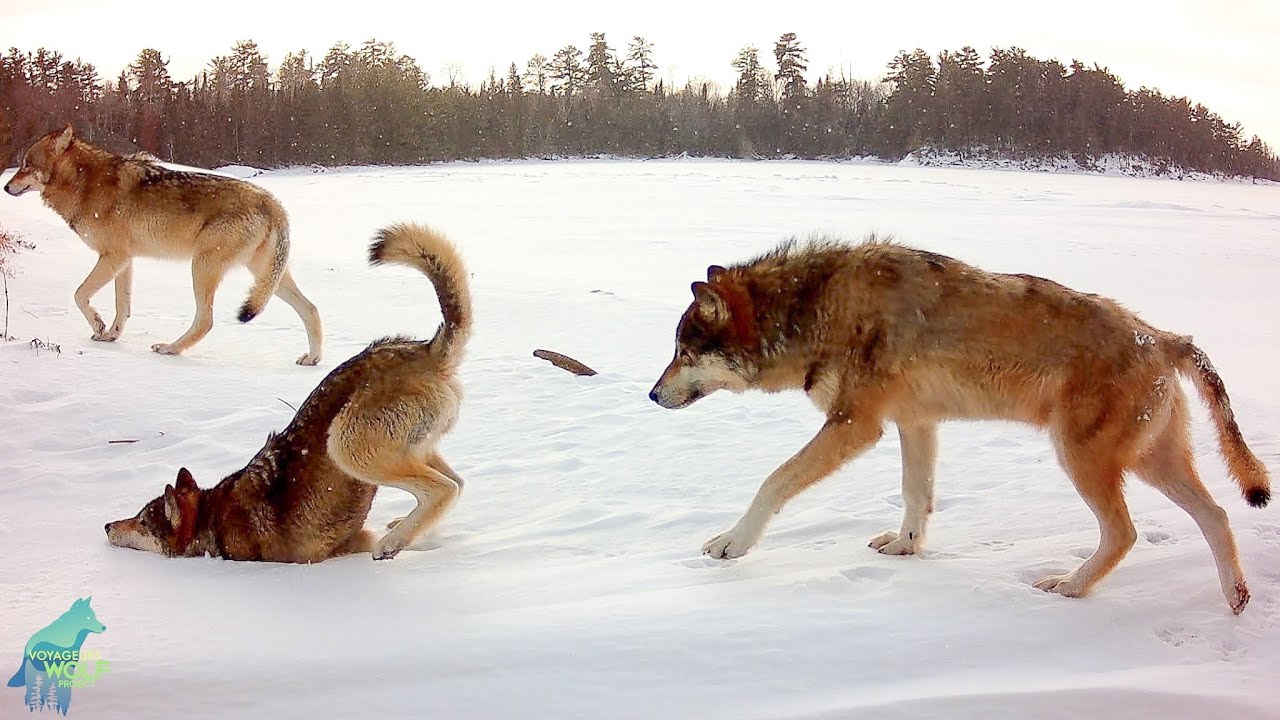
Gray wolves cross a sheet of open snow on New Year's Day, and not one of them belongs here.
They are the Blackstone Pack, a large, mostly Canadian pack, and this ground on the Kabetogama Peninsula in Voyageurs National Park is the territory of the Listening Point Pack. The researchers of the Voyageurs Wolf Project suspect the Blackstone wolves live on the north shore of Namakan Lake to the east, probably taking in Blackstone Island and a sliver of the peninsula around Kettle Falls. Their cameras logged seven excursions into the study area over the fall and winter, some lasting several days. On one trip the pack passed through three territories, Listening Point, Mithrandir and Cranberry Bay, before heading home.
Wolves take borders seriously. Packs defend territory by howling and scent-marking with urine, and a defensive howl serves partly to keep strangers away. In one Minnesota study, territories ran 195 to 555 square kilometers. A wolf trots at about 5 mph and may cover as far as 30 miles a day hunting.
Nine Blackstone wolves were seen together several times early in the winter; by mid-to-late winter the count looked more like five to seven. Midwest packs average four to eight wolves in winter. Canada and Alaska together hold tens of thousands of wolves.
Telling residents from intruders takes a great many cameras. With enough footage, the project can match wolves to packs by appearance. The nearest animal here wears a buff-tan coat grizzled with gray and black, its black-tipped tail held low. Its packmates stop to sniff a hole in the snow, and one tumbles in face-first, rump in the air.
They are moving in daylight, too, though wolf movements usually happen at night. Whether the Listening Point wolves ever met their visitors, the footage does not say.