The Story
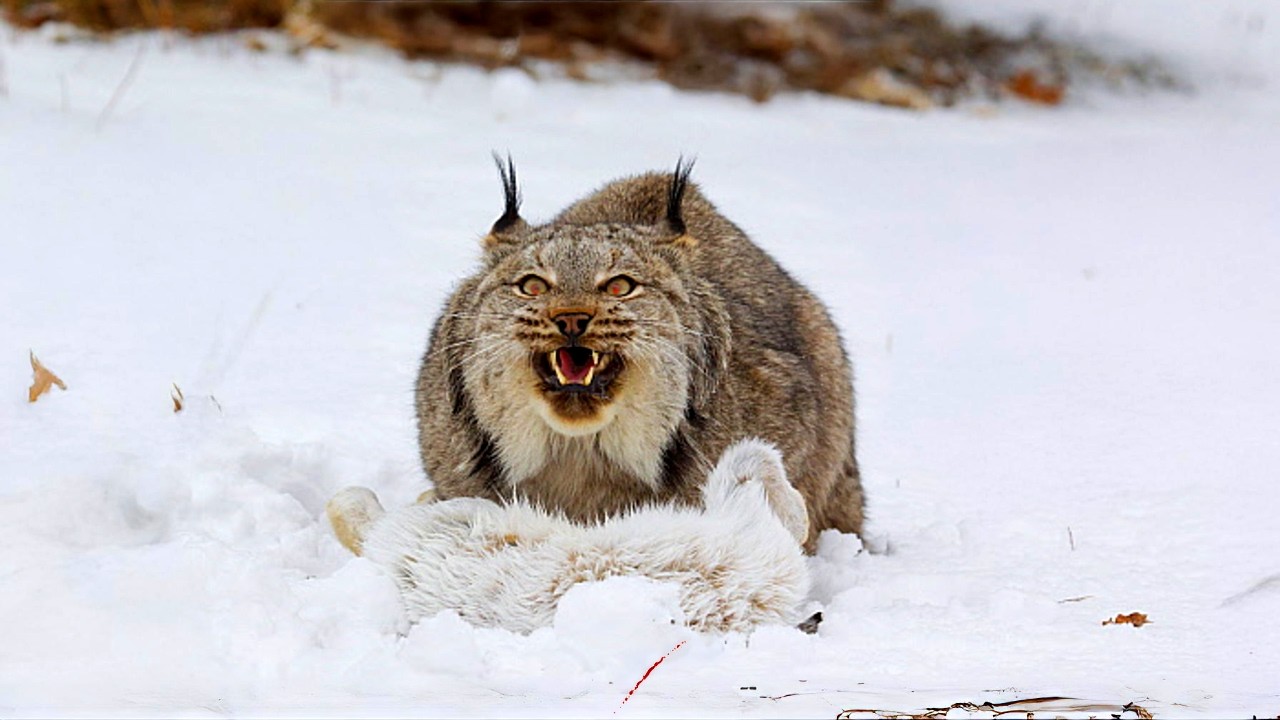
A Canada lynx crouches over a white hare in the snow, black ear tufts straight up, lips drawn back from long canines, and snarls down the lens.
That frame fronts a longer film about this northern cat, and the sound in its title is the real draw. A pair of lynx look as if they are minding their own business. Then the noise starts, and it only gets worse the longer it runs.
Lynx share much of the house cat's vocabulary: mews, yowls, spits and hisses. The yowling and growling peak in the breeding season, the one stretch of winter when these solitary adults typically stop avoiding each other. A big-cat scientist read two lynx caterwauling face to face on an Ontario road as a mating-season standoff, a ritual shouting match that lets both cats skip the real fight.
The hunting sequence is quieter and faster. Snowshoe hares feed through a heavy storm. A lynx moves forward through the snow, and just before it springs, the hares sense it and panic. The chase runs through deep snow, the hare dodging, leaping, even ducking under the surface, until the lynx takes it by the head while the rest of the group bolts.
The opening of that hunt is the textbook lynx method: stalk to within a few short bounds, then pounce. The feet do the heavy lifting. They are huge and furry, the toes spreading wide in soft snow, and they work like snowshoes, which likely gives the lynx a seasonal edge over other terrestrial hare predators.
It needs every edge it can get. Snowshoe hares make up 35 to 99 percent of a lynx's prey by biomass, and the two populations rise and fall together on a cycle of about 9.6 years, the cats lagging just behind. When hares crash, kitten deaths climb and fewer females get pregnant.
Up close, with that winter neck ruff fluffed out, the cat in the frame looks well past the species' 15 to 30 pounds and entirely unwilling to share.