The Story
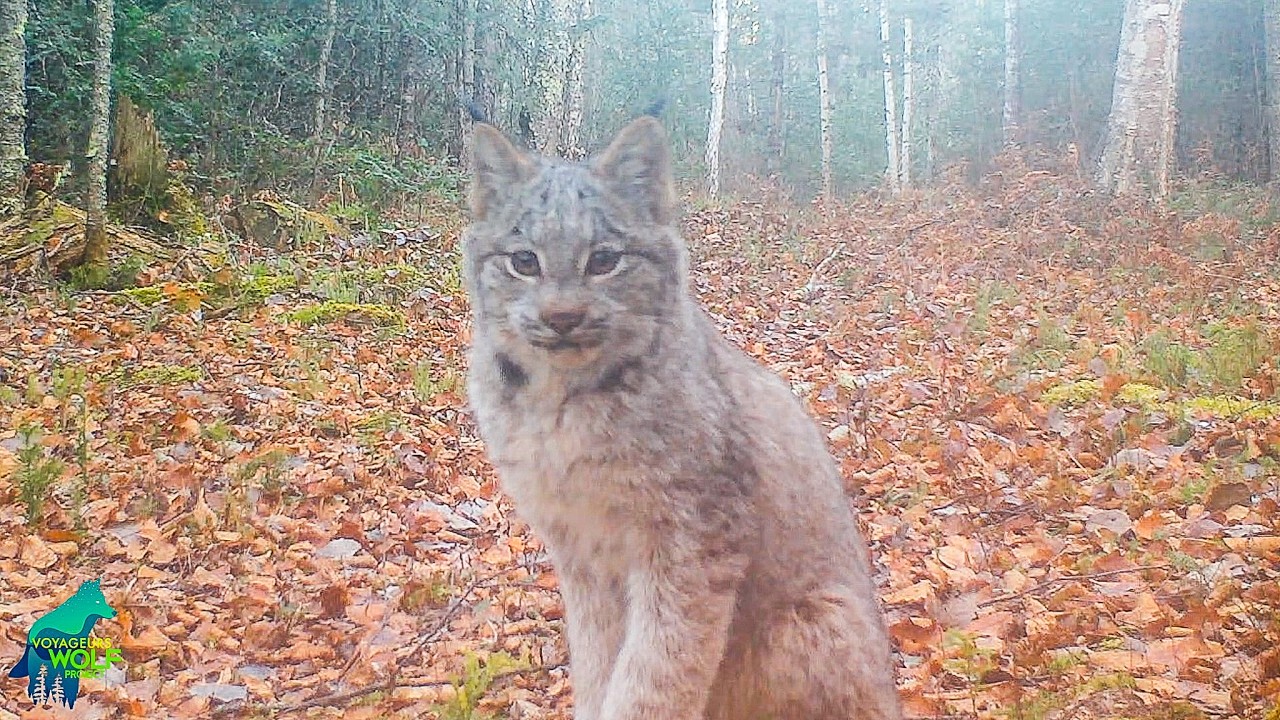
A Canada lynx sits close to a trail camera in Voyageurs National Park, black ear tufts up, and in the same orange leaves two lynx, one smaller than the other, walk off together. On its own, the close-up is a fine portrait. In context, a small piece of history.
This cat belongs to a trio: a female and two kittens, the first lynx kittens ever documented in Minnesota's only national park. The Voyageurs Wolf Project filmed the family in November, February and on the last day of March, and both kittens likely reached their first birthday.
A National Park Service study from 2000 to 2004 found one male and one female in the park and called lynx transient or scarce. A 2007-2008 survey using trail cameras and snow tracking found none in or around the park, and concluded that hares across the wider landscape were too sparse to support resident lynx. By 2015, park researchers still saw no sign of residents.
Snowshoe hare abundance is the major limiting factor for lynx, so the old surveys were reasoning from the right animal. When hares run short, kitten deaths climb and pregnancy rates fall, and a lean stretch can kill nearly all the young. This mother likely brought two kittens through a Minnesota winter anyway, something biologists were not sure the park could support.
Long black ear tufts and a grizzled gray coat set a lynx apart from a bobcat, which runs redder with distinct black spots. The paws earn their keep in winter: large, broad feet work as snowshoes in deep powder, likely giving lynx a seasonal edge over other terrestrial hare predators.
Kittens stay with their mother until the next winter's mating season, and this trio was still together on the last day of March. In the snow footage two lynx come down a white forest track toward the camera, and one walks right past it, broad furry paws pressing into the snow.