The Story
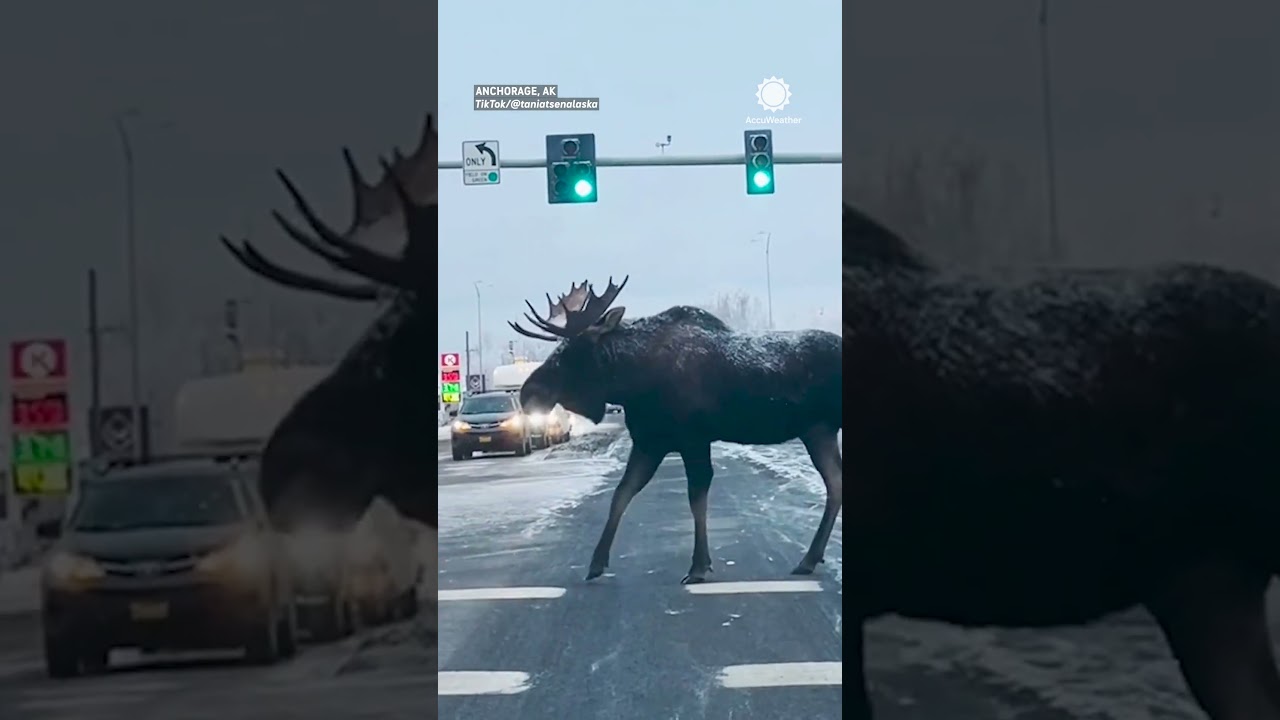
Two traffic lights over an Alaska intersection glow green, and a bull moose steps into the crosswalk anyway. He is dark from nose to rump, snow dusted along his back, a broad rack of antlers riding above a long, drooping muzzle.
The green is meant for the cars, and the cars are coming, headlights on, out of the gray winter light. He does not hurry. Each long leg swings out over the white stripes at the same unbothered walk. A moose can run 35 miles per hour. This one never sees the need.
Most of the traffic gives him the road. One car rolls on through the intersection as if the moose were not there, and the bull simply keeps walking. The oncoming traffic is fast. He makes it anyway, and to his credit he does it more or less inside the crosswalk.
Yielding to him is sound policy. The moose is the largest member of the deer family, standing 5 to 7 feet at the shoulder, with adults running from 800 pounds for a small cow to 1,600 for a large bull. Bulls carry broad palmate antlers through the rut and drop them in late fall or early winter to save energy for the cold months, so a bull still wearing his rack in the snow has not yet made that trade.
Why this moose wanted the other side of the road, nobody can say. Wildlife agencies offer some general clues. Moose seek out mineral licks to rebuild sodium reserves that winter runs down, and in Maine they are often seen along roads, using salt runoff as an artificial salt lick. Whether this bull had salt on his mind is anyone's guess.
He is dressed for the cold. Hollow guard hairs 15 to 25 centimeters long lie over a layer of underfur and hold his heat in. Long legs let a moose paw down through deep snow to reach willow, birch and aspen twigs. A cleared crosswalk is the easy part of his day.