The Story
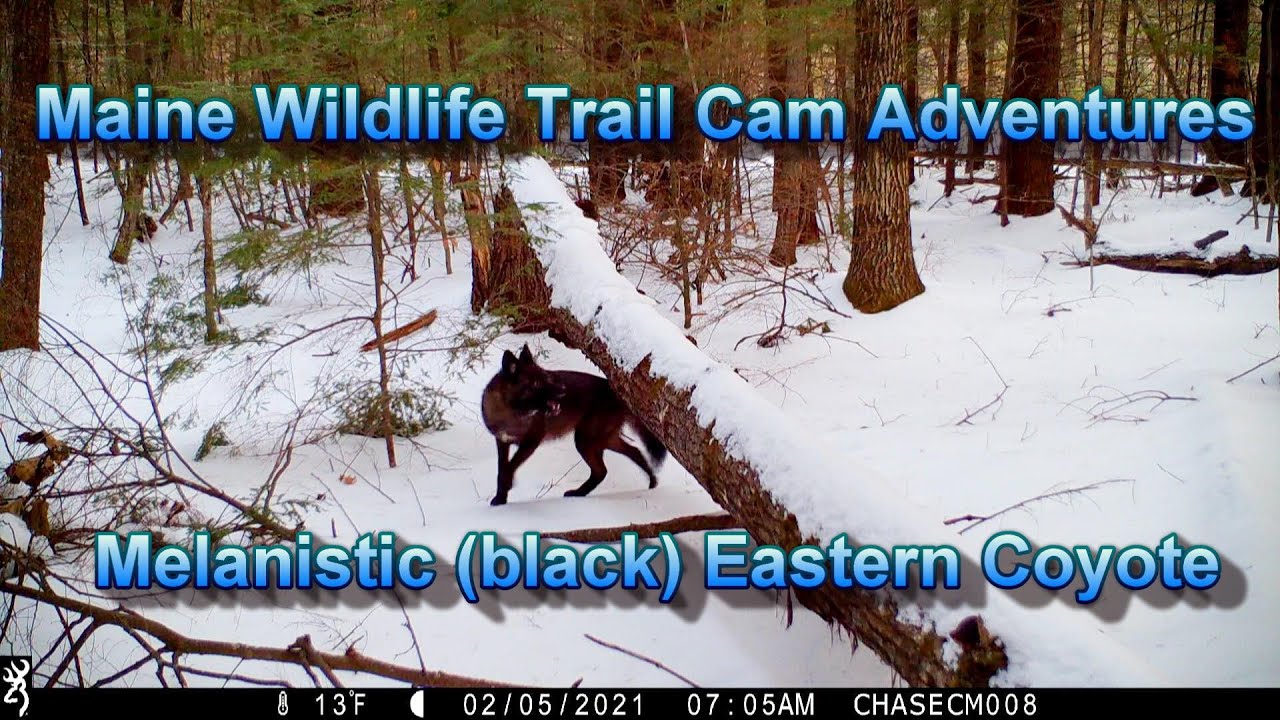
A black canid walks the edge of a snow-loaded blowdown in the Maine woods, and for a beat it reads as a wolf. It is an eastern coyote, a melanistic one, caught on two of the filmer's trail cameras.
Snow covers the forest floor, and the light is low enough for dawn or dusk. She moves at a walk past the fallen log, her coat black against the white. The filmer reads her as a young female and calls a black coyote super rare in Maine.
The filmer has a theory about this log. After a bobcat came through, a skunk-based scent lure went onto it and onto another knob nearby, and the filmer thinks that smell is what drew her in. Three cameras cover this area and two have caught her, one of them at a porcupine den site. Not a bad return on a log that smells of skunk.
Black is not on the usual coyote palette. The coat varies from blonde or reddish blonde to dark tan washed with black, with legs, ears and cheeks usually reddish. Strip that color away and a big canid crossing snow is easy to misread.
Size and shape settle it. A coyote is about one-third the size of a gray wolf, with a slighter build, large pointed ears and a pointed snout. Eastern coyotes are larger, at 35 to 45 pounds and 4 to 5 feet from nose to tail. Her age is harder to pin from a frame: eastern coyote pups in New York are fully grown at nine months.
Winter is no off-season for her kind. Coyotes molt once a year, from May into July. Mating runs January to March, and eastern coyotes, which howl all year, are highly vocal again. They are more active after sunset and at night but may be seen moving about during the day, and this camera caught her in dawn-or-dusk light.