The Story
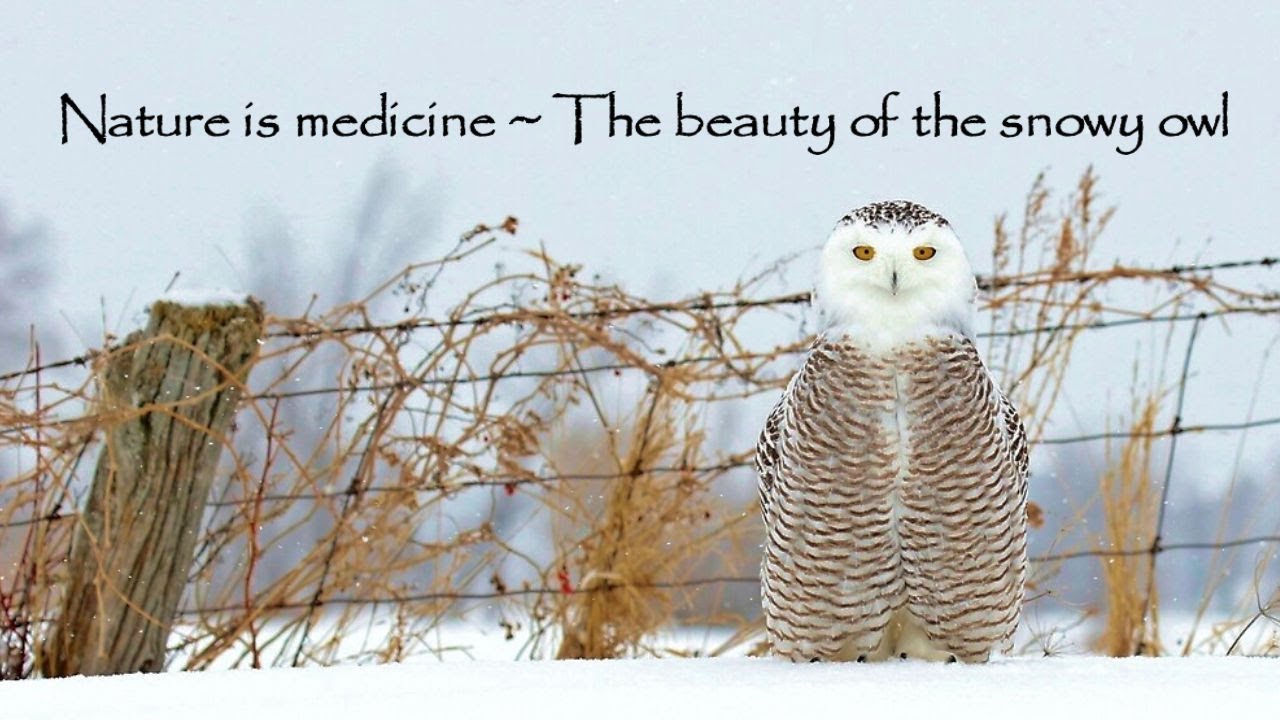
A snowy owl stands square in the snow and looks straight down the lens with a pair of yellow eyes. Behind it, dry weeds tangle through an old wire fence.
This is no pale ghost of an old male. Dark bars run in tight rows down the breast and across the wings, and the crown is flecked black. The face stays clean white around a black beak, and the ear tufts are too small to see. Barring sorts these birds: young females are heavily marked, adult females keep some dark markings, and males carry the least, taking several years to turn totally white. A bird marked like this one is most likely a female or a young owl.
The fence tells you where you are. Snowy owls breed on open Arctic tundra and winter in open country: prairies, farmland, coastal marshes, beaches, even large airports. The filmer, who has spent close to a decade photographing and filming the owls she finds, notes that they love farm land.
Against all that snow, the plumage earns its keep. White feathering camouflages a snowy owl hunting in snow-covered country, and the legs and feet are wrapped in white feathers, layered more densely than in owls of warmer climates. A hunt usually starts from a perch, and a snowy owl can pinpoint a rodent moving under the snow by hearing.
Snowy owls breed on Arctic tundra in Alaska and northern Canada and winter in Canada and the northern US, with irruptions farther south. The bigger pattern runs on lemmings. Roughly every four years, many snowy owls irrupt into the northern US in winter, and those pulses are mostly healthy young birds from a big Arctic breeding year.
Standing still in daylight fits the winter routine. Project SNOWstorm says wintering snowy owls are active primarily at night, and observers find them fairly inactive by day. They are generally solitary, and in winter females set up territories they defend until spring. The owl keeps the fence at its back and the open snow in front.