My Crittercam
My Crittercam › Elk

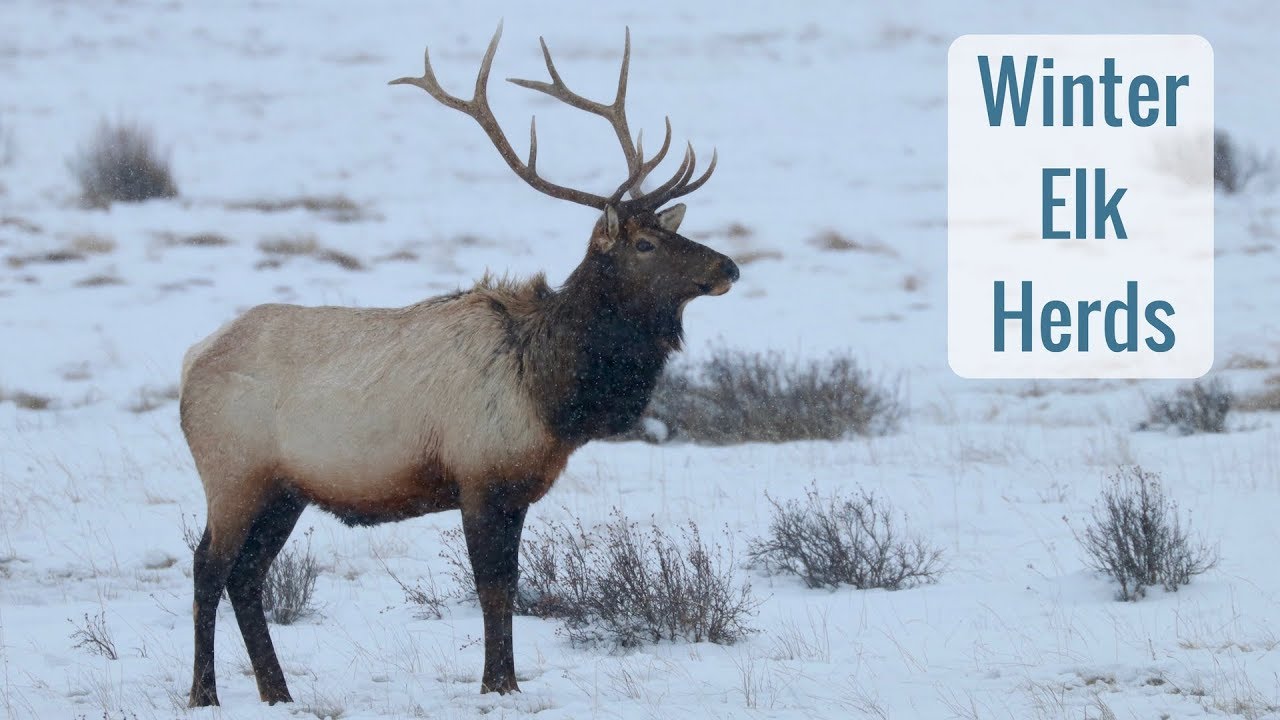
Antlered bull elk in falling Wyoming snow

A bull elk with tall, branching antlers stands side-on in falling snow with his head turned to the right, his pale body cut off at the left edge, his dark maned neck flecked with white and low shrubs around his foreleg and behind him.

Footage: Fy Nyth · 6:15 · uploaded March 18, 2018
Written by My Crittercam · published November 6, 2026

The Story

Snow is falling on open Wyoming ground, and a bull elk stands broadside in it, head up, antlers rising well above his ears. Flakes settle in the dark hair of his neck.

The clip is a winter look at several elk herds, filmed over a few weeks as they browse for whatever grass is still to be had. In this frame the bull stands alone, low gray shrubs breaking the white around his legs.

The field marks read straight out of a guide. His body is pale, the light brown of a winter coat, while the head, neck and legs run darker. Both sexes have a dark brown mane; in winter it hangs shaggy from neck to chest, and it grows longer on a bull than on a cow. Antlers grow on bulls, very occasionally on cows, and a mature bull's generally carry five tines off the main branch, for a total of six points.

Winter changes the menu. Elk prefer grass where they can get it, and these herds are browsing open ground for what is left. In winter they also browse shrubs, aspen bark and conifers, but conifers are a last resort, eaten when snow covers other plants. In western Montana elk usually move down to grass or shrub winter ranges with nearby trees for cover, while some populations never migrate.

The coat earns its keep here. It is built of hollow hairs that trap air for insulation, and an elk can plow through deep snow when it has to.

The rack itself is on a deadline. The largest bulls start dropping their antlers in late February, and the next set grows under velvet through spring and summer, as much as an inch a day. A mature bull's antlers can weigh up to 40 pounds. This bull holds his head high under his, snow and all.
Field Guide

A bull elk with a tall rack stands broadside in falling Wyoming snow, in a winter look at several herds browsing open ground for grass. Full field guide for the Elk

Common nameElk
Scientific nameCervus canadensis
FamilyCervidae (Deer family)
SizeBulls about 5 feet at the shoulder and about 8 feet nose to tail; cows about 4 1/2 feet tall and about 6 feet long.National Park Service · Animal Diversity Web, University of Michigan
WeightLarge bulls can weigh 700-1000 pounds (up to 1,100 in the rut); cows around 300-500 pounds. Calves about 30 pounds at birth.National Park Service · National Park Service · Animal Diversity Web, University of Michigan
DietGrasses, sedges, forbs and shrubs (especially willow and serviceberry); in winter, shrubs, aspen bark and conifers. About 20 pounds of vegetation a day.Montana Natural Heritage Program and Montana Fish, Wildlife & Parks · National Park Service · National Park Service · Washington Department of Fish and Wildlife
Active whenFeeds in the early morning and late evening; rests and chews cud during the day and the middle of the night.Animal Diversity Web, University of Michigan
RangeWestern North America (Rocky Mountains to the Pacific coast and western Canada), with reintroduced herds in the East such as Great Smoky Mountains National Park.Animal Diversity Web, University of Michigan · Washington Department of Fish and Wildlife · National Park Service
Lifespan10-13 years in the wild; Yellowstone's northern range elk regularly live to about 18 years.National Park Service · National Park Service
Conservation statusIUCN Red List: Least Concern. NatureServe: G4 (Apparently Secure); N5 in Canada, N4 in the US.NatureServe Explorer
Cam notes · Time of dayday
Cam notes · Seasonwinter
Cam notes · PlaceWyoming

Habitat

Behavior

Questions

Do female elk grow antlers?

Very rarely: antlers grow on bulls and only very occasionally on cows. A mature bull's antlers generally carry five tines off the main branch, for a total of six points.Montana Natural Heritage Program and Montana Fish, Wildlife & Parks · Rocky Mountain Elk Foundation

Do elk grow new antlers every year?

Yes, bulls shed them every year, the biggest starting in late February and younger bulls as late as April or early May. The new set grows under velvet through spring and summer, as much as an inch a day.Washington Department of Fish and Wildlife · National Park Service

When do bull elk bugle?

Bulls bugle in early fall, during the rut that generally runs from early September to mid-October, to advertise their status and attract cows. The call is a guttural groan that rises to a high-pitched whistle and often ends in low grunts.Washington Department of Fish and Wildlife · Animal Diversity Web, University of Michigan · National Park Service · National Park Service · Montana Natural Heritage Program and Montana Fish, Wildlife & Parks

Latest clips