North American beaver field guide
Field Guide
| Common name | North American beaver |
|---|---|
| Scientific name | Castor canadensis |
| Family | Castoridae (beavers) |
| Size | 3 to 4 ft (1 to 1.2 m) long, 1 to 1.5 ft (0.3 to 0.5 m) tall; ADW gives 900 to 1170 mmSmithsonian's National Zoo & Conservation Biology Institute · Animal Diversity Web, University of Michigan |
| Weight | 35 to 65 lb (16 to 30 kg); heaviest on record 110 lb (50 kg)Smithsonian's National Zoo & Conservation Biology Institute |
| Lifespan | 10 to 12 years in the wild; oldest on record 30 years in human careSmithsonian's National Zoo & Conservation Biology Institute · Pennsylvania Game Commission |
| Diet | Herbivore: bark, cambium, leaves, twigs and aquatic plants; aspen, poplar, willow, birch and maple favoredAnimal Diversity Web, University of Michigan · Smithsonian's National Zoo & Conservation Biology Institute · Maine Department of Inland Fisheries and Wildlife |
| Active when | Mainly nocturnal, though often active during the day; most often seen around dawn or dusk; does not hibernate, but less active in winterSmithsonian's National Zoo & Conservation Biology Institute · Maine Department of Inland Fisheries and Wildlife · National Park Service |
| Range | Throughout North America except arctic tundra, peninsular Florida and much of the desert SouthwestNatureServe Explorer · Montana Fish, Wildlife & Parks |
| Conservation status | IUCN Red List: Least Concern; NatureServe global rank G5NatureServe Explorer · Animal Diversity Web, University of Michigan |
Field Marks
- Broad, flat, trowel-shaped tail covered with leathery scales, 8 to 12 inches long and 5 to 6 inches wide.Pennsylvania Game Commission · Maine Department of Inland Fisheries and Wildlife
- Large orange incisors; the dark orange comes from the high amount of iron in the enamel.Smithsonian's National Zoo & Conservation Biology Institute
- Webbed hind feet, larger than the front feet and furless except on the top surface.Smithsonian's National Zoo & Conservation Biology Institute · Maine Department of Inland Fisheries and Wildlife
- Fur color varies geographically from yellowish-brown to black; this whole range may be found in a single watershed.NatureServe Explorer
- Muskrat and nutria can be mistaken for a beaver, but neither has a broad flattened tail.NatureServe Explorer
Habitat
- Lives in ponds, lakes, rivers, marshes, streams and adjacent wetlands.Smithsonian's National Zoo & Conservation Biology Institute
- Prefers low-gradient streams, ponds and small mud-bottomed lakes with dammable outlets; also uses reservoirs and canals if food is available.NatureServe Explorer
- Found from sea level to over 3400 m in the mountains, usually near deciduous trees and shrubs.NatureServe Explorer
- Dams of sticks, stones and mud are typically three to four feet high and most are under 50 feet long.Maine Department of Inland Fisheries and Wildlife
- Lodges are mounds of branches and logs plastered with mud; underwater openings lead to a single central chamber.Maine Department of Inland Fisheries and Wildlife · Montana Fish, Wildlife & Parks
- Beavers in lakes and rivers with a constant water level do not build dams and may not build a typical lodge.Maine Department of Inland Fisheries and Wildlife
Behavior
- To fell a tree, a beaver braces its forefeet on the trunk and props itself on its tail, gouging chips in an hourglass pattern.SUNY ESF Adirondack Ecological Center
- Beavers fell trees less than 6 in (15 cm) across first; one can gnaw through a five-inch tree in five minutes.SUNY ESF Adirondack Ecological Center · National Park Service
- The incisors grow throughout life and stay sharp because the hard orange front enamel wears slower than the softer back.National Park Service · Montana Fish, Wildlife & Parks · Smithsonian's National Zoo & Conservation Biology Institute
- Felling trees gives access to the newer, more succulent growth high in the canopy.Pennsylvania Game Commission
- Tooth marks look like twin grooves, each groove measuring one-eighth inch or more.Maine Department of Inland Fisheries and Wildlife
- Beavers spend most of the daylight hours sleeping or resting in their living chambers and emerge toward dusk, though they are often active during the day.SUNY ESF Adirondack Ecological Center · Maine Department of Inland Fisheries and Wildlife
- A colony, which may contain 2 to 12 beavers, is usually the breeding pair, the year's kits and the previous year's kits.Maine Department of Inland Fisheries and Wildlife · Montana Fish, Wildlife & Parks
- Pairs are generally believed to mate for life.Smithsonian's National Zoo & Conservation Biology Institute
- A tail slap on the water warns other beavers of danger.Smithsonian's National Zoo & Conservation Biology Institute · Maine Department of Inland Fisheries and Wildlife
- Beavers build scent mounds of mud, sticks and grass up to one-third of a meter high, unique among rodents.Smithsonian's National Zoo & Conservation Biology Institute
- Voices include the kits' high-pitched rising-falling whines and the adults' low-pitched whine.SUNY ESF Adirondack Ecological Center
- In Maine, beavers breed between January and March; a litter of one to eight kits (average four) is born between May and June.Maine Department of Inland Fisheries and Wildlife
- Kits are born fully furred with eyes open and can swim within 24 hours.Animal Diversity Web, University of Michigan
- Most young stay with their parents until almost two years old, then leave or are driven off to find a mate and start their own colony.Maine Department of Inland Fisheries and Wildlife
- Dams create wetland used by moose, deer, otters, herons and ducks, which makes the beaver a keystone species.Maine Department of Inland Fisheries and Wildlife · Montana Fish, Wildlife & Parks
Winter
- Beavers anchor cut branches in the mud of their home ponds as a winter food cache; in the Adirondacks they store branches from August until permanent ice forms.SUNY ESF Adirondack Ecological Center · Pennsylvania Game Commission
- Under the ice they feed from the cache; the water acts as a refrigerator, keeping the stems cold and preserving their nutritional value.Smithsonian's National Zoo & Conservation Biology Institute · Montana Fish, Wildlife & Parks
- Beavers do not hibernate; they are less active and spend most of the winter in the lodge or den.Maine Department of Inland Fisheries and Wildlife
- Beavers store fat in the tail, eating more in fall; the nearly hairless tail also sheds body heat.Smithsonian's National Zoo & Conservation Biology Institute · Maine Department of Inland Fisheries and Wildlife
- In the north, they need water deep enough not to freeze to the bottom so a food pile can build under the ice.NatureServe Explorer
Questions
How big do beavers get?
Adults weigh 35 to 65 pounds and are 3 to 4 feet long. The heaviest on record weighed 110 pounds.Smithsonian's National Zoo & Conservation Biology Institute
Why are beaver teeth orange?
The enamel contains a high amount of iron, which makes it dark orange. The incisors grow continuously throughout life.Smithsonian's National Zoo & Conservation Biology Institute
How does a beaver cut down a tree?
It braces its forefeet on the trunk and props itself on its tail, gouging chips in an hourglass pattern. One can gnaw through a five-inch tree in five minutes.SUNY ESF Adirondack Ecological Center · National Park Service
What do beavers eat?
They are herbivores that eat leaves, bark, twigs and aquatic plants. In Maine, aspen is the favorite, followed by birch, cottonwood, willow, oak and maple.Smithsonian's National Zoo & Conservation Biology Institute · Maine Department of Inland Fisheries and Wildlife
What do beavers do in winter?
In cold climates they spend the winter in the lodge, feeding on branches stored on the muddy pond floor. They do not hibernate, but are less active.Smithsonian's National Zoo & Conservation Biology Institute · Maine Department of Inland Fisheries and Wildlife
Where do beavers sleep?
They sleep in a dry chamber inside a lodge or bank den, entered through underwater openings. They spend most of the daylight hours sleeping or resting there.Maine Department of Inland Fisheries and Wildlife · SUNY ESF Adirondack Ecological Center · Pennsylvania Game Commission
Why does a beaver slap its tail?
A tail slap on the water warns other beavers of danger. It may also frighten predators.Smithsonian's National Zoo & Conservation Biology Institute · Maine Department of Inland Fisheries and Wildlife
When are beavers active?
They are mainly nocturnal and emerge toward dusk, though they are often active during the day. Evenings are one of the best times to see them.Smithsonian's National Zoo & Conservation Biology Institute · SUNY ESF Adirondack Ecological Center · Maine Department of Inland Fisheries and Wildlife
Why do beavers build dams?
Dams make deep water for safety from predators, access to food and underwater lodge entrances. Deeper water also keeps the food store from freezing into the ice.Montana Fish, Wildlife & Parks · Maine Department of Inland Fisheries and Wildlife
What eats beavers?
Besides humans, the main predator is the wolf. Coyotes, bears, lynx, bobcats, fishers and dogs prey on beavers foraging on shore or traveling overland.Smithsonian's National Zoo & Conservation Biology Institute · Maine Department of Inland Fisheries and Wildlife
Clips
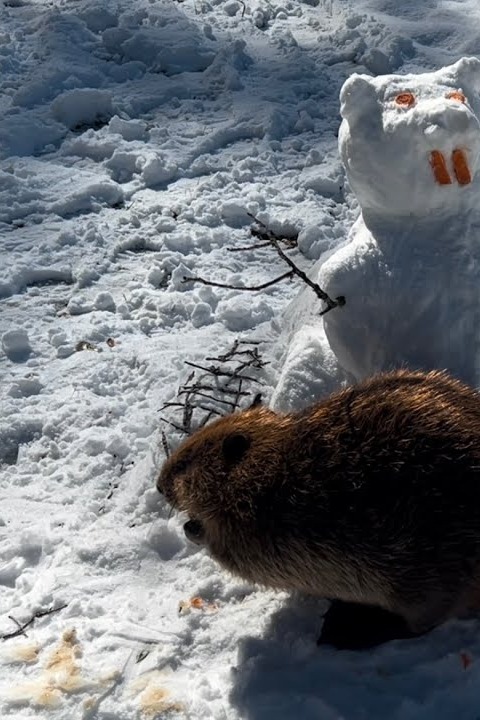
On the second day of a record-cold 2025 Gulf Coast blizzard, a rehab beaver noses the snow at the base of a snow beaver with orange food for teeth.
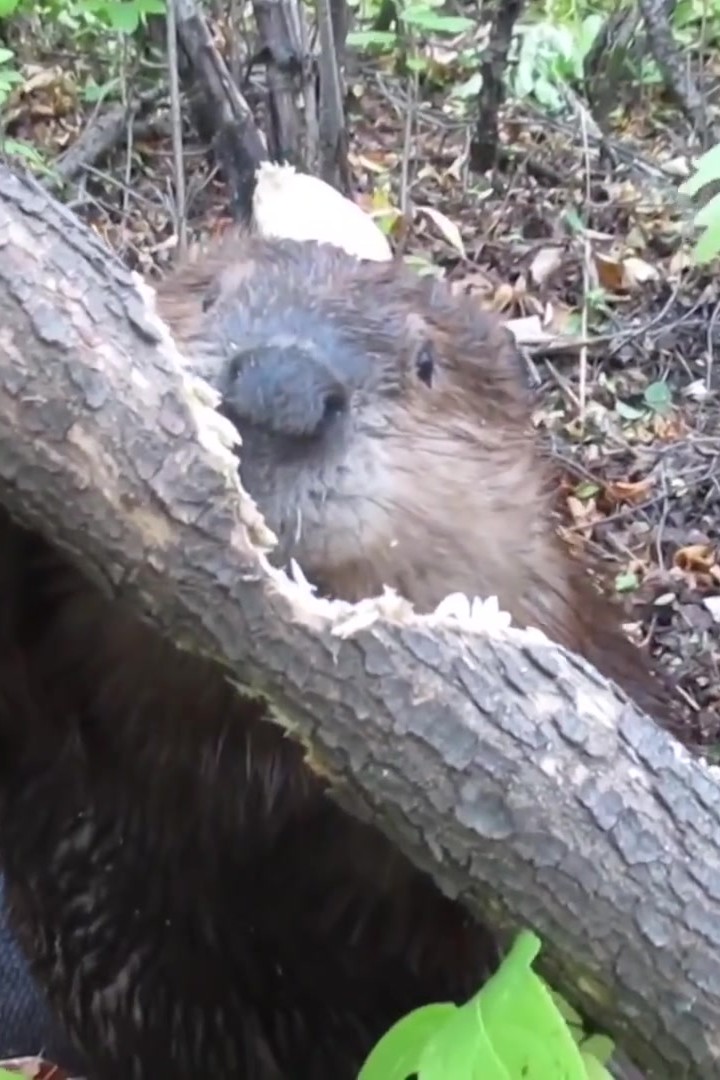
A wild beaver chews a chunk off a fallen tree trunk in daylight, filmed close enough to see the chips fly from its orange incisors.
Sources
- Castor canadensis (American beaver), Animal Diversity Web, University of Michigan
- Beaver, Smithsonian's National Zoo & Conservation Biology Institute
- Beaver, Pennsylvania Game Commission
- Beaver, Maine Department of Inland Fisheries and Wildlife
- Living with Wildlife: Beavers, Montana Fish, Wildlife & Parks
- Castor canadensis, American Beaver, NatureServe Explorer
- Beaver (Adirondack mammals), SUNY ESF Adirondack Ecological Center
- Beaver - Prince William Forest Park, National Park Service
- Beaver - Acadia National Park, National Park Service